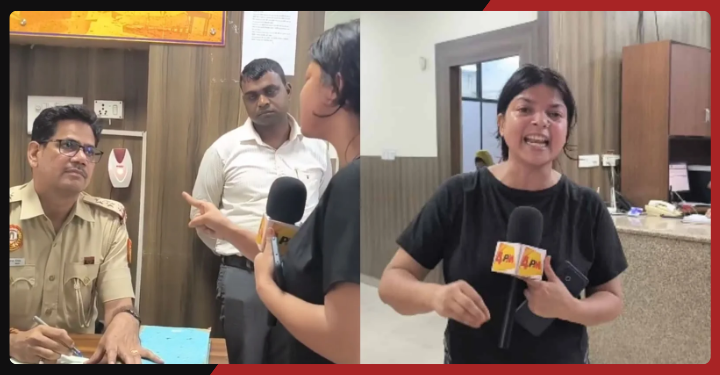

New Delhi: Major journalist organisations have called for action and a fair investigation after two women journalists alleged that they were assaulted by Delhi Police personnel following their detention in South Delhi.
Shaheen Khan and Nafisa Khan alleged that they were covering a high-profile event in Saket when they were stopped by police. According to their account, they were subsequently taken to Saket Police Station, where they faced physical assault.
The women later made another serious allegation—that the alleged violence became worse after police personnel discovered they were Muslims.
Their claims immediately drew attention from press organisations and political leaders. Journalist bodies issued statements condemning the alleged incident and called for a transparent investigation into the conduct of the police personnel involved.
The reaction from the media community reflects broader concerns about the safety of journalists in India. Reporters frequently work in difficult environments where they may encounter political pressure, hostile crowds or confrontations with authorities.
The protection of journalists has become particularly important in the era of digital media, where independent reporters often cover breaking events with limited institutional support.
Videos circulated online showing the two journalists with apparent injury marks. The visuals contributed to public anger and increased demands for an investigation.
Press organisations argued that if the allegations are established, those responsible should face appropriate action. They have emphasised that journalists must be allowed to report without fear of physical violence or intimidation.
However, Delhi Police has denied the accusations.
Police officials said the journalists’ claims were factually incorrect and misleading. According to the police, the women were stopped because they allegedly obstructed a VVIP movement route and did not comply with instructions.
The police said they were brought to the station for inquiry and denied allegations that they were assaulted.
The dispute between the two versions has made evidence crucial.
A proper investigation could examine CCTV footage, mobile videos, deployment records, station entry records and witness accounts. Medical documentation could also become important in establishing whether injuries were sustained and under what circumstances.
The demand for a free and fair investigation is therefore not simply about supporting one side. It is about ensuring that the truth can be established through evidence.
The case has also brought attention to the role of journalist associations. Press bodies often act collectively when reporters face threats, detention or alleged violence. Their involvement can help ensure that complaints receive public attention.
Political reactions have also intensified the controversy. Opposition leaders have criticised the alleged treatment of the journalists and questioned whether reporters are being given enough freedom to question those in power.
The case now stands as a test of accountability.
If the allegations are proven, it could raise serious questions about the conduct of officers and the protection of journalists. If evidence supports the police version, it could clarify the circumstances surrounding the detention.
Either way, the public deserves a credible account of what happened.
The controversy also highlights the importance of professional protocols during high-security events. Police personnel need clear procedures for dealing with journalists, while reporters also need to understand security restrictions.
But disagreements over access or movement should never become an excuse for unlawful violence.
The demand from journalist organisations is ultimately simple: investigate the allegations fairly, protect press freedom and hold anyone responsible for misconduct accountable.
As the case continues to attract national attention, the focus remains on whether a transparent process will provide answers to Shaheen Khan, Nafisa Khan and the wider media community.