
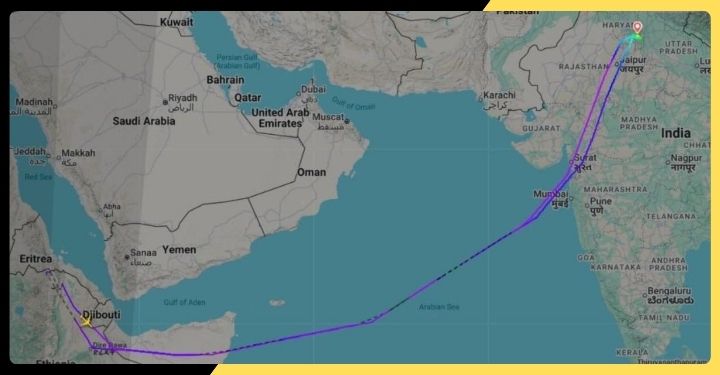

Air travel is built on precision planning, but even the most carefully scheduled journeys can take unexpected turns. That reality became clear when an IndiGo flight departing Delhi for Manchester completed an extraordinary 14-hour journey—only to land back where it started.
The flight departed from Indira Gandhi International Airport in New Delhi with passengers expecting to arrive at Manchester Airport in the United Kingdom later the same day. Operated by IndiGo, the route represents part of the airline’s broader ambition to strengthen international connectivity between India and Europe.
However, somewhere during the long-haul journey, the aircraft had to reverse course.
While airlines often limit the details they share publicly about mid-flight operational issues, such reversals usually stem from safety-related decisions. These could include technical alerts, operational constraints, weather developments, or logistical challenges at the destination airport.
In aviation, a precautionary approach is standard practice. Even minor warnings from onboard systems can prompt pilots to reconsider the flight plan. Rather than risk complications at a distant airport, crews may opt to return to their origin where full maintenance support is available.
For passengers, the result was a rare and surreal travel experience: nearly 14 hours in the sky without ever leaving the starting point in practical terms.
Flights that return to their departure airport after extended travel are uncommon but not unheard of. Global aviation history includes several cases where aircraft have turned back after crossing significant portions of their routes.
One reason is the structure of long-haul operations. Flights between continents often traverse multiple airspace jurisdictions, each with its own operational constraints. Additionally, large aircraft carry carefully calculated fuel reserves and diversion plans that can influence whether a plane continues forward or returns.
In this case, returning to Delhi allowed IndiGo to access its primary operational base, including engineering teams, spare parts, and passenger service staff. This often makes resolving technical or logistical concerns significantly easier.
For travelers onboard, the experience likely meant fatigue, frustration, and disrupted schedules. Airlines usually respond by offering rebooking options, accommodations, and sometimes compensation depending on regulatory frameworks and the cause of the disruption.
Despite the inconvenience, aviation experts stress that turning back is always a calculated decision rooted in safety and operational prudence.
In the end, the flight that set out to connect Delhi with Manchester became something far more unusual—a long-haul detour that ended exactly where it began. For the passengers involved, it was a journey to nowhere. For the airline industry, it was another reminder that even in the age of advanced aviation technology, unpredictability remains part of flying.
