
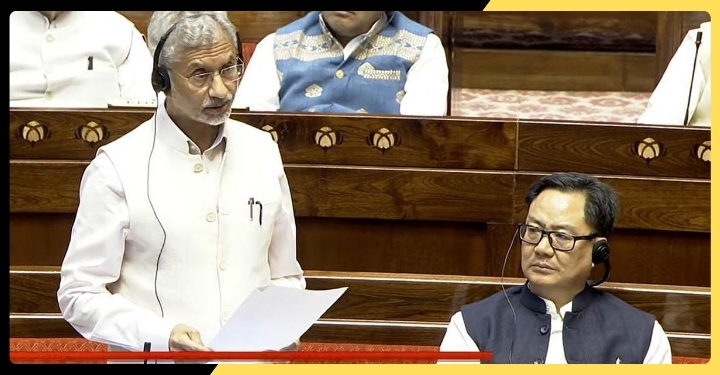

India has reiterated its call for peace and diplomatic engagement amid the escalating tensions in West Asia involving Iran, Israel and the United States. External Affairs Minister Subrahmanyam Jaishankar told Parliament that India strongly favours a return to dialogue and diplomacy as the only sustainable path to resolving the crisis.
Speaking in the Rajya Sabha, Jaishankar said the ongoing developments in the region are a matter of deep concern for the international community and particularly for India, which maintains strong political, economic and diaspora ties across West Asia. He emphasised that New Delhi supports de-escalation, restraint by all parties, and the protection of civilian lives amid the expanding conflict.
The minister noted that the government has been closely monitoring the situation since the conflict began. He stressed that India continues to believe that disputes should be resolved through diplomatic channels rather than military confrontation. According to Jaishankar, communication between nations and sustained dialogue remain essential to stabilising the region.
India’s concerns are not limited to geopolitics alone. The safety of Indian nationals living and working across the Middle East is also a key priority for the government. Thousands of Indians reside in countries across the region, and disruptions caused by the conflict—including suspended flights and security concerns—have prompted the government to intensify evacuation and assistance efforts.
Jaishankar also informed Parliament that the government has been in contact with regional governments to ensure the welfare of the Indian community. Authorities have been coordinating with embassies and local administrations to provide assistance where required and facilitate the safe return of Indian citizens if necessary.
Another significant concern for India is the potential economic fallout of the conflict. The Middle East remains a critical supplier of crude oil and energy resources to India. Escalating hostilities in the region could disrupt energy supply chains and lead to volatility in global oil markets. Jaishankar said the government is carefully assessing developments to ensure energy security and protect the interests of Indian consumers.
The Cabinet Committee on Security, chaired by Prime Minister Narendra Modi, has also been closely monitoring the evolving situation. Officials have been tasked with evaluating the geopolitical, economic and humanitarian implications of the conflict and preparing contingency plans where necessary.
India’s diplomatic approach reflects its broader foreign policy strategy of maintaining balanced relations with multiple countries in the region. New Delhi has longstanding ties with both Iran and Israel, as well as strong strategic cooperation with the United States.
By advocating dialogue and diplomacy, India is positioning itself as a responsible global actor seeking stability in an increasingly volatile region. As tensions continue to rise, New Delhi has reiterated that peaceful negotiations remain the most viable path toward lasting security and regional stability.
