
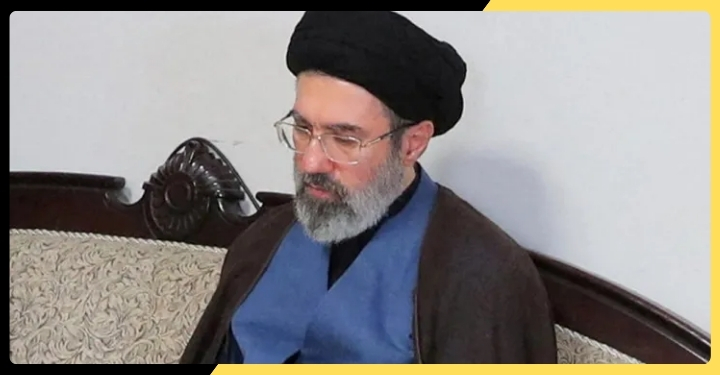

Iran has appointed Mojtaba Khamenei as the country’s new Supreme Leader following the death of his father, Ali Khamenei, who was killed in airstrikes attributed to the United States and Israel. The announcement, made by Iran’s clerical leadership, marks a dramatic shift in the country’s political landscape and comes amid escalating conflict across the Middle East.
The decision was taken by the Assembly of Experts, the powerful clerical body responsible for selecting Iran’s supreme leader. According to Iranian state media, the assembly voted decisively to appoint Mojtaba Khamenei, making him the third supreme leader since the establishment of the Islamic Republic in 1979.
The leadership transition follows a turbulent week in which Ali Khamenei—who had ruled Iran for more than three decades—was reportedly killed during coordinated strikes on Iranian targets. His death plunged the region into heightened tensions and intensified the ongoing confrontation involving Iran, the United States, and Israel.
At 56, Mojtaba Khamenei is considered a relatively secretive figure in Iranian politics. Although he has never held elected office, analysts say he has long wielded significant influence behind the scenes, particularly through his close ties with the Islamic Revolutionary Guard Corps (IRGC), the powerful military force that plays a central role in Iran’s political and security apparatus.
His appointment is widely seen as controversial. Iran’s revolutionary ideology historically opposed hereditary leadership, emphasizing clerical legitimacy rather than dynastic rule. However, critics argue that Mojtaba’s succession to his father resembles a monarchical transition—something the 1979 Islamic Revolution sought to abolish.
Supporters within Iran’s conservative establishment, however, have defended the move. Officials said Mojtaba Khamenei’s religious training and years of influence within key institutions made him a natural successor during a time of national crisis. Leaders of the IRGC and other military institutions quickly pledged loyalty to the new supreme leader, signaling a strong show of internal support.
The new leader now faces enormous challenges. Iran is currently navigating one of the most volatile periods in its modern history, with ongoing military confrontations, international sanctions, and economic pressure weighing heavily on the country.
International reaction to the appointment has been swift and divided. Western governments and Israeli officials have criticized the move, warning that the leadership change may signal a continuation—or escalation—of Iran’s hardline policies. Meanwhile, Iranian officials have framed Mojtaba’s rise as a demonstration of national unity and resistance in the face of foreign aggression.
As supreme leader, Mojtaba Khamenei will hold ultimate authority over Iran’s military, judiciary, and major policy decisions. His leadership will likely shape Iran’s response to the ongoing regional conflict and determine whether the country pursues confrontation or diplomacy in the months ahead.
For now, Iran enters a new political era—one defined by uncertainty, conflict, and a leadership transition that could reshape the future of the Islamic Republic.