
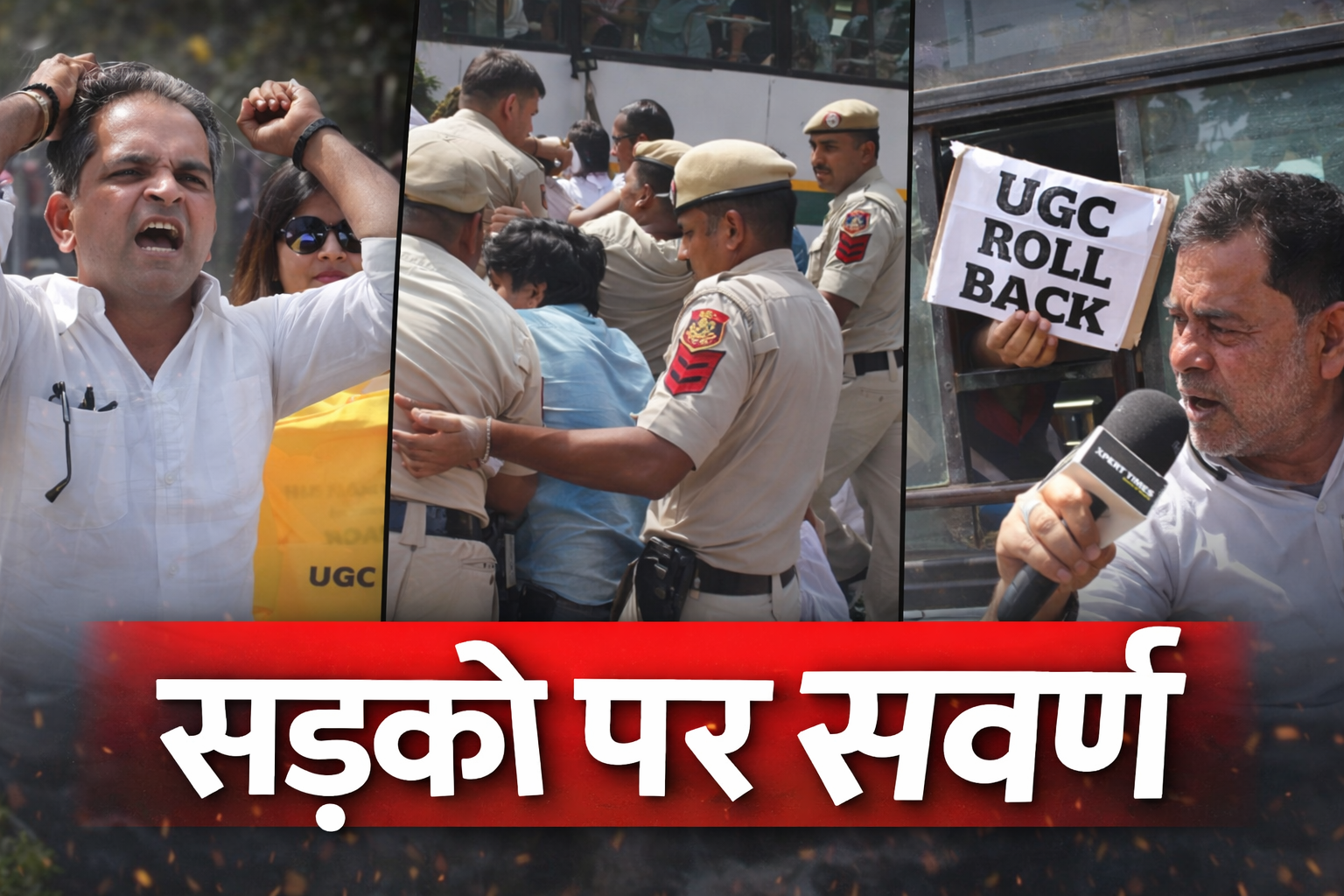

A wave of student activism has taken center stage in the national capital as protesters gathered at Delhi’s Ramleela Maidan to demand the rollback of policies introduced by the University Grants Commission (UGC). The protest brought together students, teachers, activists, and civil society members who expressed concerns about how recent policy changes may impact higher education and academic freedom.
The demonstration reflected growing unrest among sections of the academic community. Many participants argued that the new policies could potentially affect university autonomy, faculty recruitment processes, and the overall quality of higher education in India. Placards, slogans, and speeches highlighted a unified demand: the reconsideration or rollback of the controversial decisions.
Ground reporting from the protest site captured the emotions and arguments of the demonstrators. Several students stated that they fear the reforms could create barriers in education and reduce opportunities for young scholars. Others pointed out that the consultation process was not transparent enough and called for greater dialogue between policymakers and stakeholders in the education sector.
Teachers and education activists also joined the movement, emphasizing the importance of preserving academic standards. Some speakers at the rally argued that universities must remain spaces for critical thinking, innovation, and independent research. According to them, any policy that changes the structure of higher education should involve extensive consultation with academic experts and institutions.
The protest was not just about a single policy decision but reflected a broader debate about the future of education in India. Participants highlighted issues such as funding for universities, accessibility of education, and the need to protect academic freedom. For many students, the rally served as a platform to voice their frustrations and demand accountability from authorities responsible for shaping education policy.
At the same time, the gathering remained largely peaceful, with participants emphasizing democratic methods of protest. Many protesters stressed that raising concerns through public demonstrations is an essential part of civic engagement in a democratic society.
Observers note that student movements have historically played an important role in shaping education policy across the world. From campus demonstrations to nationwide campaigns, student activism has often brought attention to issues that might otherwise remain overlooked.
The Ramleela Maidan protest adds another chapter to that tradition. Whether the movement leads to policy changes or further dialogue remains to be seen. However, it has undeniably sparked renewed discussion about the direction of higher education in India.
As the debate continues, one thing is clear: students and educators alike are determined to ensure that their voices are heard in decisions that directly affect their academic futures.
