
The controversy surrounding electoral-roll revisions has intensified in India, with Cockroach Janta Party founder Abhijeet Dipke demanding the resignation of Chief Election Commissioner Gyanesh Kumar and announcing further protests.
Dipke’s campaign has focused heavily on the Special Intensive Revision of electoral rolls. The process is intended to update voter lists, but opposition groups and activists have raised concerns about the possibility of eligible voters being removed or required to provide additional documentation.
The Election Commission has rejected allegations that its actions are intended to manipulate elections. It has maintained that voter-list revision is part of the commission’s responsibility and that procedures are designed to identify eligible electors and correct electoral records.
The political dispute intensified after reports of internal differences within the commission. The Indian Express reported that Election Commissioners Sukhbir Singh Sandhu and Vivek Joshi had raised objections multiple times concerning decisions linked to the SIR process. These reported disagreements have become an important part of the public debate, although they do not establish by themselves that the commission acted unlawfully.
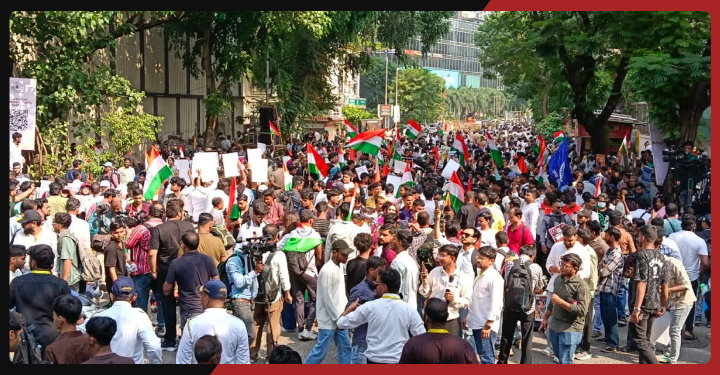
Dipke has nevertheless argued that Kumar should accept responsibility and resign. At a CJP protest in Mumbai, he warned that his organisation would intensify its campaign and potentially move toward a broader demand involving the prime minister.
The CJP’s approach reflects a broader trend in which electoral institutions are becoming central subjects of political debate. Questions about voter registration, deletions, verification and electoral transparency can have consequences for citizens as well as political parties.
The controversy has also drawn participation from public figures outside traditional politics. Reports from the Mumbai protest said actors and cultural figures, including Naseeruddin Shah, Shabana Azmi and Vishal Dadlani, were present or associated with the demonstration. Their participation brought additional public visibility to the campaign.
At the same time, the claims made by protesters remain disputed. Reports have cited very large numbers of voter names allegedly removed from electoral rolls, while the Election Commission and government have challenged allegations of politically motivated deletions. Reuters reported that opposition parties have also raised concerns about voter-list changes and called for greater scrutiny, while the Election Commission has said its actions were lawful.
The dispute therefore has two distinct dimensions. The first is administrative: how electoral rolls are prepared, verified and corrected. The second is political: whether the process has been conducted fairly and whether public confidence in the Election Commission has been affected.
Dipke’s campaign is attempting to connect the two. By demanding Kumar’s resignation, the CJP is arguing that accountability should follow from what it describes as failures in the electoral process.
The next phase is expected to involve further demonstrations. The CJP has announced another proposed protest in Delhi, while other political groups have separately called for action over the Election Commission’s functioning.
The debate will ultimately depend on evidence concerning individual voter records, official procedures, legal safeguards and the explanations provided by election authorities. Public demonstrations can increase political pressure, but questions of legality and institutional responsibility require evidence and due process.
As the controversy continues, the Election Commission remains under heightened scrutiny. Dipke’s campaign has ensured that Gyanesh Kumar’s role in the electoral-roll revision process remains a major subject of political discussion, while the commission’s explanations and subsequent administrative actions will remain important to understanding the dispute.