
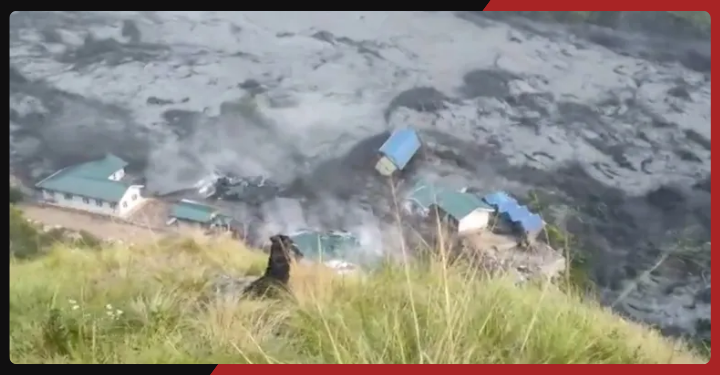

Central Nepal has been struck by another destructive flood, renewing concerns about the safety of mountain communities already facing repeated emergencies. On Sunday, October 11, a flash flood along the Budhi Gandaki River in Gorkha district swept away houses and bridges and damaged infrastructure connected to a hydropower project.
The incident came as Nepal continued its recovery from earlier catastrophic flooding and landslides. The country’s mountainous terrain, unstable slopes and fast-flowing rivers make many settlements vulnerable to sudden natural disasters, particularly when landslides obstruct watercourses and create temporary dams.
Preliminary accounts indicate that the latest flood may have been triggered by a landslide upstream. The obstruction reportedly held back water before failing and releasing a powerful surge through the river valley. Authorities and specialists are examining the event to determine exactly how the blockage formed and how the water was released.
The resulting flood damaged homes and transport infrastructure, with reports identifying multiple bridges among the structures affected. A hydropower project site also suffered damage. These losses can have consequences far beyond the immediate flood zone, particularly for remote communities that depend on bridges and narrow roads to reach services.
At least five people were reported missing in initial official accounts, while rescue teams began searching affected areas and assisting residents. The Nepal Army used helicopters and ground operations to support emergency response efforts. Authorities also warned people living near the river to evacuate to safer locations as water levels remained a concern.
For families whose homes have been swept away, the disaster means an immediate loss of shelter and possessions. Some residents may also have lost access to electricity, transport and other basic services. The destruction of bridges can make it harder for relief workers to reach communities and deliver essential supplies.
Nepal’s earlier disasters have demonstrated how difficult recovery can become when multiple settlements and critical infrastructure are damaged simultaneously. Rebuilding homes is only one part of the process. Communities may also need restored roads, functioning communications, safe drinking water and support for livelihoods disrupted by flooding.
The latest event highlights the importance of understanding the relationship between landslides and river flooding. A landslide can change the course of a stream or block a river entirely. If water accumulates behind the obstruction, its eventual release can create a sudden flood downstream. Such events can be difficult to predict without effective monitoring and communication systems.
The International Centre for Integrated Mountain Development said preliminary information pointed to a possible breach of a temporary landslide-created blockage near Chumchet. The organisation noted that floodwaters carrying mud, sediment and debris moved downstream through the Budhi Gandaki corridor.
Improved disaster preparedness could help reduce future losses. Risk mapping, community education, monitoring of unstable slopes and river channels, and reliable warning systems can all support faster responses. Authorities also need evacuation plans that account for the limited transport options available in remote mountain settlements.
However, emergency planning cannot eliminate every danger. Sudden landslides and floods can occur quickly, particularly when the river channel is obstructed and water accumulates behind the blockage. Continued scientific assessment and local preparedness are therefore essential.
The priority now is to find missing residents, assist displaced families and establish the full extent of the destruction. Once immediate risks are under control, the recovery effort will need to address the vulnerabilities exposed by the flood and help communities prepare for future emergencies.


