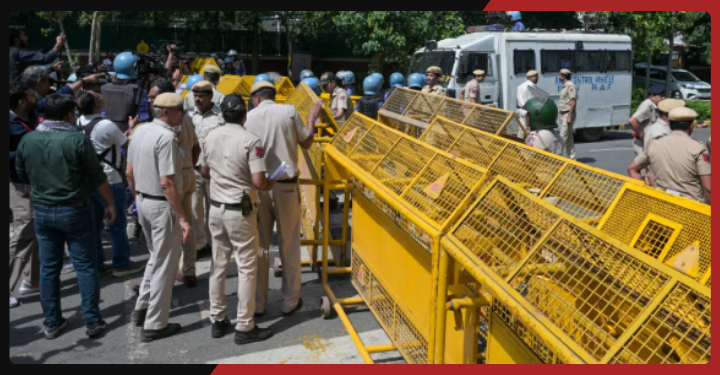

New Delhi, October 10, 2026: Heavy security arrangements, barricades and reports of detentions marked preparations for a demonstration against the Election Commission near Jantar Mantar. The planned gathering, organised by the Cockroach Janta Party (CJP) and supported by activist groups, called for the resignation of Chief Election Commissioner Gyanesh Kumar.
Authorities moved to regulate access to central Delhi as the protest approached. Security personnel were deployed at important locations, and transport restrictions were reported as part of the effort to control crowd movement.
Delhi Police Strengthen Security
The protest came after earlier demonstrations over the same electoral controversy resulted in hundreds of detentions. Authorities were therefore preparing for another gathering that could draw activists, political supporters and members of the public.
Reports described the use of barricades, surveillance equipment and additional security personnel. Police also conducted checks around locations considered sensitive during the demonstration.
These measures were designed to prevent disorder and control access to restricted areas. However, the extensive security operation also attracted criticism from those who believed peaceful demonstrators should have a reasonable opportunity to assemble.
The full impact of the restrictions depended on the precise orders in force and the locations affected.
Detentions Before the Protest
The reported detention of YouTuber Dhruv Rathee from his Gurugram residence became one of the most prominent developments ahead of the gathering. Other individuals were reportedly detained or removed from areas around Jantar Mantar.
The circumstances of individual cases require separate verification. It is important to establish the legal grounds for each detention, whether any formal charges were filed and whether the people concerned were subsequently released.
Earlier demonstrations related to the same controversy also saw activists and political participants detained as they attempted to reach Jantar Mantar. Those events contributed to heightened expectations of a major police operation on October 10.
Transport Disruptions Across the Capital
The security preparations affected public movement in Delhi. Reports indicated that metro access restrictions, traffic diversions and changes to some rail services were introduced in connection with the planned demonstration.
For commuters, these disruptions created a need to plan journeys carefully. Office workers, students and passengers travelling to railway stations could face delays even if they had no involvement in the protest.
Official advisories are particularly important during such situations because restrictions can change as security conditions develop. Travellers should verify their routes and service status rather than relying on unconfirmed social media posts.
The Political Issue Behind the Protest
At the centre of the demonstration is the Special Intensive Revision of electoral rolls. Protest organisers have alleged that voter-list changes could affect eligible citizens and have called for greater transparency in the process.
The Election Commission’s role in maintaining accurate voter lists is crucial to electoral administration. At the same time, claims of improper deletions must be supported by verifiable evidence before they can be treated as established facts.
A transparent explanation of the revision process, the criteria used to update records and the procedures available to challenge errors could help answer some of the concerns raised by demonstrators.
Balancing Security and Democratic Rights
The events highlight a difficult task for public authorities: maintaining order while respecting peaceful assembly and political expression.
Restrictions may be necessary to manage specific security risks, but their scope and implementation should be clear. Demonstrators also have a responsibility to act peacefully and comply with lawful directions.
Independent documentation, clear official communication and transparent procedures can help establish whether security measures were proportionate to the circumstances.
The Road Ahead
The demonstration has placed the handling of public protests and the Election Commission’s accountability under renewed scrutiny.
The immediate questions concern the status of detained individuals, the precise restrictions imposed and the response to demands for electoral transparency. A reliable public account should be based on verified information from authorities, protesters and independent reporting.
As the debate continues, both public safety and public confidence in democratic institutions remain important. Addressing the underlying electoral concerns transparently may prove as significant as managing the immediate security operation.