
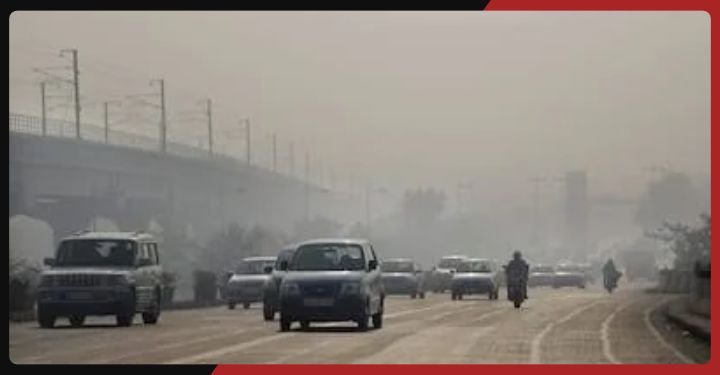

Millions of residents in Delhi are preparing for another challenging winter as pollution levels rise sharply across the national capital. The worsening situation has prompted authorities to impose Stage II restrictions under the Graded Response Action Plan, following a significant increase in the city’s Air Quality Index.
On November 2, Delhi’s AQI reached 324 at 4 pm, entering the very poor category for the first time this season. The development has raised concerns about the potential impact of prolonged exposure to polluted air, particularly among children, senior citizens and people with existing health conditions.
The latest restrictions are aimed at controlling pollution sources and preventing the situation from becoming more serious.
Health Concerns Increase Among Residents
Air pollution is a significant public-health concern, particularly during the winter months when pollutants can remain trapped close to the ground.
Very poor air quality can cause irritation in the eyes, nose and throat. It may also aggravate asthma, bronchitis and other respiratory conditions.
People with cardiovascular and respiratory illnesses may be particularly vulnerable. Children and elderly residents are also considered more susceptible to the effects of polluted air.
Doctors generally advise people to avoid unnecessary outdoor activities when pollution levels are high. Outdoor exercise near busy roads and heavily polluted areas should be avoided during periods of poor air quality.
Residents experiencing breathing difficulties or other concerning symptoms should seek appropriate medical advice.
AQI Crosses 300 Across Delhi
The deterioration has been recorded at several monitoring stations throughout the capital.
On Monday, areas including RK Puram, ITO, Akshardham, Sirifort, Dwarka, Chandni Chowk and North Campus reported very poor air quality.
Jahangirpuri recorded a reading of 417, placing it in the severe category.
The variation between monitoring stations shows that some neighbourhoods are experiencing significantly worse pollution than others.
The overall citywide AQI reached 324 at 4 pm, indicating that the problem has spread beyond individual pollution hotspots.
GRAP-II Restrictions Introduced
The CAQM activated Stage II of the Graded Response Action Plan across Delhi-NCR after reviewing pollution levels and weather forecasts.
Under the measures, municipal authorities must intensify mechanical road sweeping and water sprinkling. Anti-smog guns will also be used at identified locations to control dust.
Construction sites will face stronger monitoring, while authorities will take action against open waste burning.
Traffic police departments have been directed to improve vehicle movement and reduce congestion at major intersections.
Vehicle owners will also face stricter checks concerning Pollution Under Control certificates and emission standards.
Residents Encouraged to Use Public Transport
Reducing the number of private vehicles on the road is another important part of the pollution-control strategy.
Residents have been encouraged to use public transport, including buses and metro services, and consider carpooling for daily journeys.
Delhi has introduced additional winter measures, including higher parking charges at authorised parking facilities and restrictions on certain vehicles entering the capital.
Government and private offices have also been asked to limit physical attendance to 50%, with the remaining employees working from home, subject to applicable exemptions.
These steps are intended to reduce traffic-related emissions and congestion.
A Long-Term Challenge for Delhi
Although GRAP-II introduces immediate measures, experts have repeatedly highlighted the importance of long-term solutions.
Delhi needs stronger public transportation networks, cleaner industrial operations, better waste management and more effective control of construction dust.
Regional coordination is also essential because air pollution does not remain confined within city boundaries.
For residents, the coming weeks will require greater attention to official advisories and personal precautions.
The latest AQI increase is a reminder that winter pollution remains one of Delhi’s most persistent environmental and public-health challenges.