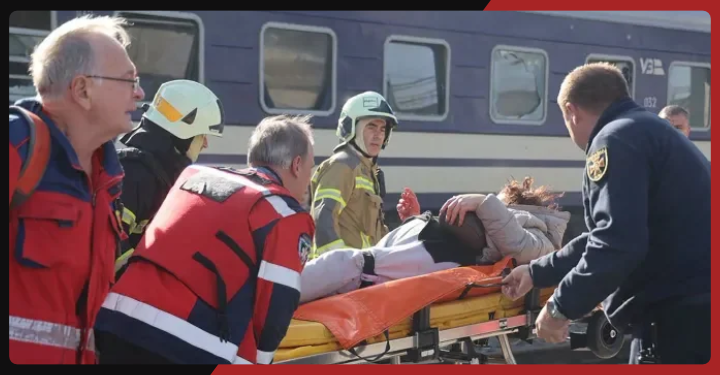

At least 13 people were initially reported killed after a Russian drone struck a railway platform in Dnipro, Ukraine, on Thursday, October 29. The attack occurred while passenger trains were standing at the station, placing civilians using an essential public transport service in danger. Later reports put the death toll at 14, while several others were reported injured. The incident has renewed concern over the risks faced by ordinary Ukrainians during the continuing war.
The strike took place at a railway station in Dnipro, a major city in central-eastern Ukraine. According to the state railway operator, Ukrzaliznytsia, a jet-powered drone hit one of the platforms. Train No. 866, travelling from Dnipro to Zaporizhzhia, was at the station when the attack occurred.
Ukrainian President Volodymyr Zelenskyy said a commuter train and a regular passenger train were standing at the platform. Regional governor Oleksandr Hanzha initially confirmed 13 deaths and at least five injuries. Dnipro Mayor Borys Filatov described the incident as a tragedy.
Emergency personnel rushed to assist victims, while medical teams treated the wounded. Police and other officials worked at the scene as authorities assessed the situation and gathered information about the casualties.
One detail has attracted particular attention: an elevated threat alert had been issued before the strike. Nevertheless, many passengers were still on the platform. The incident illustrates the difficulties faced by civilians who must continue using public transport even when the risk of an aerial attack is high.
For many people in Ukraine, travelling by train is not optional. Rail services provide access to employment, medical appointments, education and family support. They also connect communities separated by long distances and help people move when security conditions change.
A warning can alert passengers to danger, but the time available to react may be limited. At a busy station, passengers may need to collect belongings, assist children or elderly relatives, or find the nearest shelter. The design of the station and the availability of protected areas can influence whether people are able to respond safely.
Repeated drone threats have already affected Ukraine’s railway operations. Railway authorities have had to evacuate passengers, adjust schedules and interrupt services when attacks appeared imminent. The railway operator reported that more than 5,800 train services required passenger evacuations during September because of drone threats.
The human consequences of the Dnipro attack extend beyond the number of people killed or wounded. Survivors may face physical injuries and emotional distress, while relatives must cope with sudden bereavement and uncertainty. Communities also lose people who were simply carrying out ordinary daily activities.
The strike has prompted renewed calls for stronger measures to protect civilians. Zelenskyy condemned the incident and urged international partners to respond more firmly to Russian escalation. Ukraine has repeatedly sought additional air-defence support to reduce the danger posed by drones and missiles.
Any assessment of responsibility under international law requires a careful examination of the available evidence, including the intended target and precautions taken. Civilian deaths underscore the importance of investigating the circumstances of attacks and ensuring that parties to a conflict comply with their legal obligations.
For Dnipro residents, the incident is another reminder that the consequences of war are felt far from the front lines. Railway platforms, residential streets and other everyday spaces can become dangerous within moments.
As emergency assistance continues and authorities review the incident, protecting civilians remains an urgent priority. The attack highlights the need for effective warnings, accessible shelters, reliable emergency response and sustained efforts to reduce the threat posed by aerial strikes.