
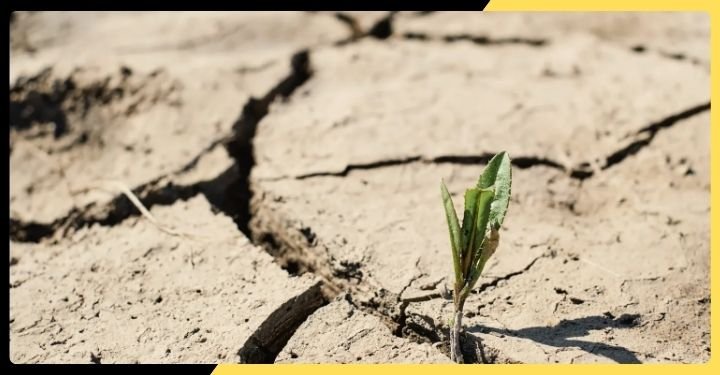

India’s farming sector is facing mounting challenges after the country recorded its driest June in more than a decade, leaving vast stretches of agricultural land without adequate rainfall during the crucial start of the kharif season. The rainfall shortage has delayed sowing, increased production costs, and raised concerns over crop yields, rural incomes, and food prices. For millions of farmers, the weak beginning to the monsoon has transformed what is usually a season of hope into one marked by uncertainty and financial pressure.
June is considered one of the most important months in India’s agricultural calendar. It marks the arrival of the southwest monsoon, which provides the moisture needed to sow major kharif crops such as rice, cotton, soybean, maize, pulses, groundnut, and millets. Farmers typically begin preparing their fields weeks in advance, investing in seeds, fertilizers, machinery, and labor with the expectation that seasonal rains will arrive on time.
This year, however, below-normal rainfall has disrupted that cycle. Many fields remain dry, preventing farmers from planting crops according to schedule. Those who have already sown seeds in anticipation of rainfall face the possibility of poor germination, forcing them to replant once adequate moisture becomes available. Re-sowing not only delays cultivation but also increases expenses at a time when many farming households are already operating on limited budgets.
The financial burden is especially severe for small and marginal farmers, who make up the majority of India’s agricultural workforce. These farmers often depend on loans from banks, cooperatives, or informal lenders to finance seasonal cultivation. Rising input costs combined with uncertain weather increase the risk of lower profits or even financial losses if crop production declines. Many families rely almost entirely on agricultural income to cover education, healthcare, and daily household expenses, making a poor farming season particularly difficult.
Higher cultivation costs are becoming another major concern. Farmers may need to use irrigation pumps more frequently where water is available, leading to increased electricity or diesel expenses. Additional spending on seeds, fertilizers, labor, and pest management may also become necessary if delayed sowing affects crop growth. For farmers without reliable irrigation facilities, the lack of rainfall leaves few alternatives except waiting for the monsoon to strengthen.
The rainfall deficit is also placing pressure on water resources. Reservoirs, village ponds, rivers, and groundwater systems rely on early monsoon rainfall for replenishment. Lower water levels at the beginning of the season could create irrigation shortages later in the crop cycle, particularly if rainfall remains uneven. Water scarcity may also affect livestock farming by reducing the availability of drinking water and green fodder, adding further strain to rural livelihoods.
Agricultural markets are closely monitoring the situation. Lower crop production can reduce supplies of food grains, pulses, oilseeds, fruits, and vegetables, leading to higher market prices in the coming months. Consumers may face increased food inflation if harvests fall significantly below expectations, while food processing industries could encounter higher raw material costs. These developments would have implications not only for farmers but also for the wider economy.
Experts emphasize that weather uncertainty is becoming an increasingly important challenge for Indian agriculture. Climate variability has resulted in more frequent dry spells, intense rainfall events, and shifting seasonal patterns. Instead of receiving evenly distributed rainfall over several months, many regions now experience irregular precipitation that complicates agricultural planning. Such changes require farmers to adopt more flexible and climate-resilient farming practices.
Government agencies are encouraging growers to adopt contingency measures, including drought-tolerant crop varieties, efficient irrigation techniques, mulching, and rainwater harvesting. Agricultural extension services are also providing district-level advisories to help farmers adjust sowing schedules according to local weather conditions. Some state governments have prepared emergency seed reserves to support re-sowing if rainfall improves during the coming weeks.
Despite the current difficulties, there remains cautious optimism that the monsoon could recover during July and August. A sustained improvement in rainfall would allow many farmers to complete sowing, restore soil moisture, and improve crop prospects. However, experts warn that rainfall distribution will remain critical, as prolonged dry spells followed by short periods of heavy rain may not provide the consistent moisture required for healthy crop development.
For India’s farming community, the weeks ahead will be decisive. The success of the kharif season now depends on whether the monsoon returns with sufficient strength and consistency to support agricultural production. Until then, farmers continue to balance rising costs, uncertain weather, and hopes for better rains that can safeguard both their livelihoods and the nation’s food security.
