
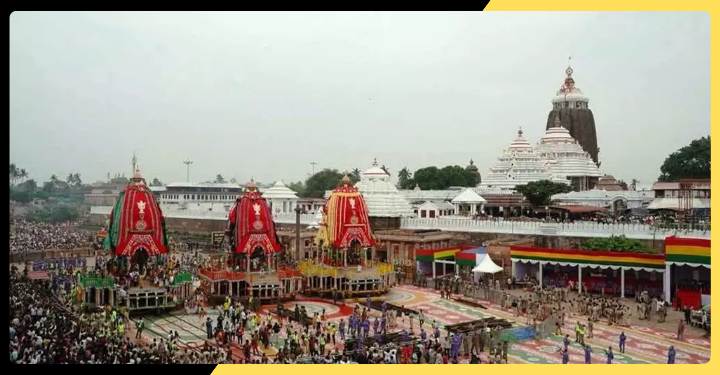

The holy city of Puri in Odisha came alive with unmatched devotion and celebration as the magnificent chariots of Lord Jagannath, Lord Balabhadra, and Devi Subhadra rolled through the Grand Road during the world-famous Rath Yatra. The annual festival, one of the largest and oldest religious gatherings in the world, witnessed millions of devotees assembling to seek the blessings of the divine siblings. Amid chants of “Jai Jagannath,” the rhythmic beats of traditional drums, and the sound of conch shells, the sacred procession created an unforgettable spiritual atmosphere filled with faith, joy, and unity.
From the early hours of the morning, devotees from different parts of India and several countries gathered along the Bada Danda, the broad avenue connecting the Jagannath Temple and the Gundicha Temple. Many pilgrims had traveled hundreds of kilometers, while others waited patiently overnight to witness the rare and sacred journey of the deities. The streets were decorated with colorful flags, flowers, and traditional motifs, creating a festive environment that reflected Odisha’s rich cultural heritage.
The central attraction of the Rath Yatra is the three enormous wooden chariots, which are handcrafted every year by skilled artisans using sacred neem wood. Built according to centuries-old traditions, the chariots showcase remarkable craftsmanship and artistic excellence. Lord Jagannath’s chariot, Nandighosa, is the tallest and most imposing, featuring sixteen massive wheels and decorated with vibrant red and yellow canopies. Lord Balabhadra’s Taladhwaja is distinguished by its green and red coverings, while Devi Subhadra’s Darpadalana is adorned with elegant red and black decorations. Each chariot is beautifully embellished with intricate carvings, wooden sculptures, sacred symbols, and colorful fabrics that symbolize divine grandeur.
Before the chariots began their journey, one of the festival’s most revered rituals, Chhera Pahanra, was performed by the Gajapati Maharaja of Puri. Carrying a golden broom, the king ceremonially swept the platforms of the three chariots while offering prayers to the deities. This ancient ritual serves as a reminder that no matter how powerful or wealthy a person may be, everyone is equal before God. The ceremony was greeted with loud chants from devotees, who viewed the moment as a powerful symbol of humility and selfless service.
As the rituals concluded, thousands of eager devotees grasped the thick ropes attached to the gigantic chariots. With prayers on their lips and devotion in their hearts, they pulled the massive structures slowly along the Grand Road. The movement of the towering chariots was met with thunderous cries of “Hari Bol” and “Jai Jagannath,” filling the air with spiritual energy. For many devotees, pulling the chariots is considered a once-in-a-lifetime opportunity that brings divine blessings, spiritual purification, and fulfillment of heartfelt wishes.
The Rath Yatra is unique because it allows Lord Jagannath to come out of the temple and meet His devotees directly. Unlike regular temple rituals, where only certain sections of society traditionally had access, the Rath Yatra symbolizes universal acceptance and equality. Everyone, irrespective of caste, religion, nationality, or social status, can witness the divine procession and receive the Lord’s blessings. This message of inclusiveness has made the festival one of the most respected and admired religious events in the world.
The celebrations extend far beyond the religious procession. Cultural programs featuring Odissi dance performances, devotional music, folk dances, and traditional instruments added vibrancy to the festival. Local markets were filled with handicrafts, religious souvenirs, and delicious Odia delicacies, offering visitors an opportunity to experience the state’s rich cultural traditions. The festival also supports thousands of local artisans, craftsmen, vendors, and tourism-related businesses, contributing significantly to the regional economy.
To ensure the safety and comfort of the massive gathering, authorities implemented extensive security arrangements across Puri. Thousands of police personnel, disaster response teams, medical staff, firefighters, and volunteers were deployed throughout the city. Surveillance cameras, drone monitoring, emergency medical centers, traffic management systems, and public announcement facilities helped maintain order during the procession. Volunteers distributed drinking water, first aid, and assistance to elderly pilgrims, ensuring that the event remained peaceful and well-organized.
The Rath Yatra also reached millions of devotees worldwide through live television broadcasts and online streaming platforms. Families who could not travel to Puri participated virtually by watching the procession from their homes, temples, and community centers. The digital coverage allowed the spiritual significance of the festival to transcend geographical boundaries, connecting devotees across continents.
As the majestic chariots rolled steadily toward the Gundicha Temple, they carried not only the sacred deities but also centuries of tradition, devotion, and hope. The sight of millions of people united in prayer and celebration highlighted the timeless values of compassion, humility, and harmony that define the Jagannath Rath Yatra.
More than a grand religious festival, the Rath Yatra is a living expression of India’s spiritual legacy. It reminds humanity that faith has the power to unite people beyond all differences and that Lord Jagannath’s blessings are open to everyone. Year after year, the magnificent chariots continue to inspire millions, making the Rath Yatra one of the world’s most extraordinary celebrations of devotion, culture, and unity.