
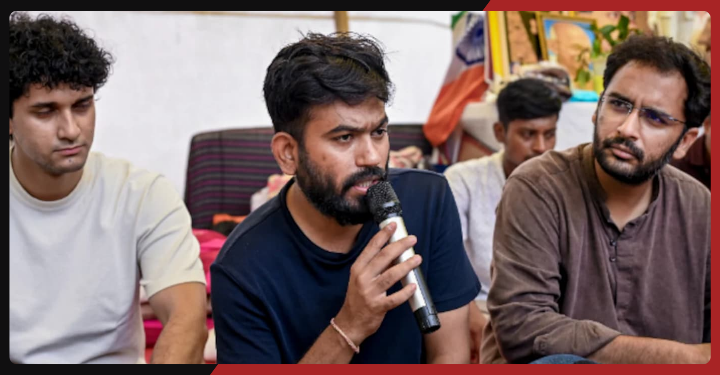

New Delhi, October 16, 2026: The Cockroach Janta Party’s planned demonstrations in Delhi and Mumbai have highlighted the different legal and administrative circumstances under which public protests can take place. While founder Abhijeet Dipke has vowed to continue his campaign despite the possibility of arrest, the arrangements for the two proposed gatherings differ significantly.
The CJP has announced a “Lehra Do Tiranga” demonstration at Central Park in Delhi’s Connaught Place and a parallel gathering at Azad Maidan in Mumbai. The organisation says the events are intended to express solidarity with detained leaders Ashutosh Ranka and Saurav Das and demand the resignation of Chief Election Commissioner Gyanesh Kumar.
Dipke has publicly stated that he is prepared to go to jail if necessary. He has also insisted that the planned action is peaceful and centres on waving the national flag. His remarks followed reports that police could detain him ahead of the demonstration.
In Delhi, the organisers face restrictions connected to prohibitory orders under Section 163 of the Bharatiya Nagarik Suraksha Sanhita. Authorities have said that the absence of the necessary permission prevents a large organised assembly at Central Park. The park was also scheduled to remain closed to the public on October 16 and 17.
The Delhi High Court declined to issue an order restraining the proposed protest. Instead, the court took note of the police’s assurance that the gathering would be regulated. Police subsequently indicated that a small group of 11 people could be permitted to carry the national flag and sing the national anthem at a suitable location.
The distinction is important. A court’s refusal to restrain a protest does not necessarily amount to unrestricted permission for every proposed activity. Police may still have responsibilities relating to crowd management, traffic, safety and compliance with applicable orders.
Authorities have also distinguished between displaying the national flag and organising a public assembly. The former is not inherently prohibited, but the latter may be subject to legal requirements, especially in a busy commercial district.
The situation in Mumbai is different. Reports indicate that police granted permission for the gathering at Azad Maidan, a designated protest site. This provides organisers with a more established location for their demonstration, subject to any conditions attached to the permission.
The two-city plan has drawn attention because the same organisation intends to advance the same political message in different administrative settings. The contrasting arrangements raise practical questions about how organisers select venues, apply for permissions and communicate their plans to supporters.
The political demand at the centre of the campaign concerns the Special Intensive Revision of electoral rolls. The CJP has alleged that the revision process has led to the removal of a very large number of voter names and has called for accountability from the Election Commission. Election authorities maintain that the exercise is designed to improve electoral-roll accuracy and identify duplicate or ineligible entries.
For citizens, the key concern is whether eligible voters can confirm their registration and correct errors before elections. Clear procedures for checking names, submitting claims and obtaining decisions are essential to maintaining public confidence in the electoral system.
The CJP’s campaign has also been shaped by the reported judicial custody of Ranka and Das following an earlier protest. The organisation has presented the new demonstrations as a response to their detention and a way of keeping its electoral demands in public view.
For police and local authorities, the challenge is to maintain public order without unnecessarily restricting lawful peaceful expression. For organisers, the challenge is to communicate their demands while respecting applicable conditions and ensuring that supporters understand the limits of any permission granted.
The immediate outcome of the demonstrations remains uncertain. Nevertheless, the contrasting arrangements in Delhi and Mumbai have made the campaign a wider discussion about the practical boundaries of peaceful assembly, the responsibilities of law enforcement and the democratic importance of electoral accountability.
