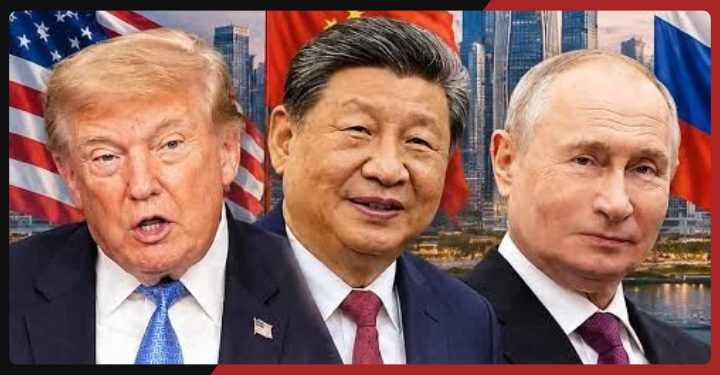

China is preparing to host one of the most closely watched diplomatic gatherings of 2026, with US President Donald Trump and Russian President Vladimir Putin expected to join Chinese President Xi Jinping for an unprecedented three-way summit in Shenzhen.
The meeting is expected to take place on November 19, during the Asia-Pacific Economic Cooperation summit. It will bring together the leaders of three countries with enormous influence over international trade, security and geopolitical developments.
For Xi Jinping, hosting the meeting represents an important opportunity to demonstrate China’s growing diplomatic influence. Beijing has developed strong economic and political relationships with different countries while simultaneously maintaining intense competition with the United States.
The proposed summit could strengthen China’s image as a country capable of bringing rival international powers together.
Shenzhen is an important location for the gathering. The southern Chinese city has developed into a major technology, manufacturing and financial centre. Its transformation from a relatively small settlement into a global economic hub reflects China’s broader development over recent decades.
Hosting an international summit involving Trump and Putin would provide additional attention to the city’s growing global importance.
However, Xi faces a complicated diplomatic challenge. China maintains close relations with Russia, but it also has extensive economic ties with the United States. Any serious deterioration in relations with either country could create difficulties for Beijing.
The nuclear arms-control question is particularly sensitive.
Trump wants China to participate in a new agreement covering nuclear weapons. The American administration argues that China’s growing nuclear capabilities make its participation increasingly important.
However, Beijing has resisted calls to join trilateral negotiations, pointing to the considerable difference between its nuclear arsenal and the much larger stockpiles held by Washington and Moscow.
China may therefore prefer a discussion that does not immediately create obligations or commitments regarding its nuclear weapons.
The war involving Iran is another important subject that Trump intends to raise with Xi and Putin. The conflict has created diplomatic and security challenges that extend beyond the Middle East.
China and Russia have their own strategic interests in the region, making their positions important for any broader international discussion.
Trade and economic relations are also likely to remain in the background of the summit. The United States and China have experienced serious disagreements over tariffs, technology restrictions and access to critical resources.
Although the trilateral meeting is not primarily designed to resolve these disputes, the presence of the two presidents in China could strengthen opportunities for diplomatic engagement.
Xi must also balance China’s support for international cooperation with the potential criticism that a meeting of three powerful leaders could marginalise smaller countries.
The APEC summit itself includes 21 participating economies, many of which have their own economic and security priorities.
The possibility of a separate three-way meeting attracting greater attention than the wider APEC programme has therefore raised questions about the role of major-power diplomacy.
Analysts believe the summit could provide China with substantial diplomatic visibility, even if it does not result in major agreements.
For Beijing, the challenge will be to demonstrate leadership without becoming trapped in disputes between Washington and Moscow.
The outcome could influence China’s diplomatic strategy and its relationships with the world’s other major powers.