
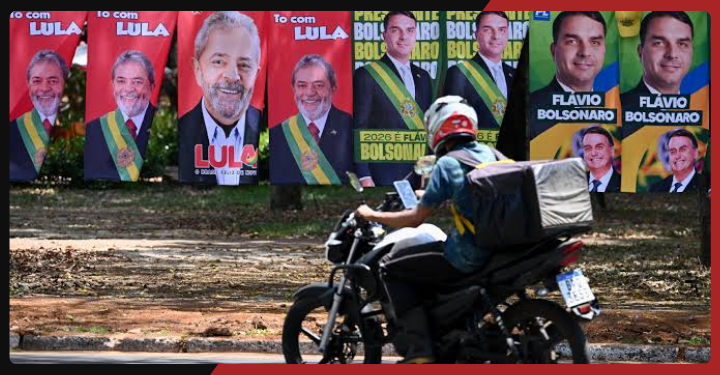

Brazil’s presidential election is going down to the wire, with projections showing Jair Bolsonaro’s lead narrowing and a runoff becoming increasingly likely.
The changing numbers have added suspense to an election already defined by deep political divisions. Bolsonaro’s initial advantage had raised hopes among his supporters that he could avoid a second round, but the shrinking margin has made that outcome less certain.
A runoff would mean that the Brazilian electorate would return to the polls to choose between the two leading candidates.
The first-round results are particularly important because they determine which candidates survive. Once the field is reduced to two, political calculations change significantly.
Bolsonaro’s campaign has relied heavily on his established conservative base. His supporters view him as a leader who can represent their concerns about crime, economic policy and traditional social values.
Opponents, meanwhile, have sought to unite voters who disagree with his political approach.
That contest has made the election highly polarized.
A runoff could provide an opportunity for both sides to reach beyond their traditional supporters. Candidates will have to appeal to voters who may not strongly identify with either major political camp.
That means economic and everyday concerns could become even more important.
Brazilian voters are dealing with questions about employment, income, inflation, public services and economic opportunity. The candidates’ plans for addressing those issues are likely to receive increased attention during a second-round campaign.
Crime and public security will also remain major issues. Bolsonaro has traditionally presented himself as a strong supporter of tougher security policies. His opponent is expected to emphasize different approaches to crime prevention and social policy.
The environment could become another key area of debate. Brazil’s stewardship of the Amazon is closely watched internationally, and presidential policies can affect environmental protection, agricultural interests and climate commitments.
Foreign policy is also relevant. Brazil has major economic and diplomatic relationships with countries around the world. The next president will influence the country’s approach to international organizations, trade agreements and regional cooperation.
Investors are also paying attention. Political uncertainty can affect expectations about government spending, fiscal policy and regulation.
The narrowing lead illustrates the importance of waiting for the full count. Projections are based on available voting data and can shift as additional ballots are reported.
For Bolsonaro, maintaining first place in the first round would still be politically significant even if he fails to secure an outright victory. It would put him into the runoff with momentum and give his campaign an opportunity to consolidate conservative support.
For his opponent, closing the gap would represent evidence that Bolsonaro’s support is not sufficient for an easy victory.
The coming campaign could therefore involve intense efforts to attract voters from candidates who fail to reach the second round.
Political endorsements may become important, but voters do not always follow the recommendations of political leaders. Campaigns will need to persuade individuals directly.
The election’s final result will ultimately depend on the official vote count and the second-round vote if a runoff is confirmed.
For now, Brazil remains in a politically uncertain position. Bolsonaro’s narrowing lead has prevented the election from producing a clear first-round winner and has pushed the country toward another potentially decisive electoral battle.


