
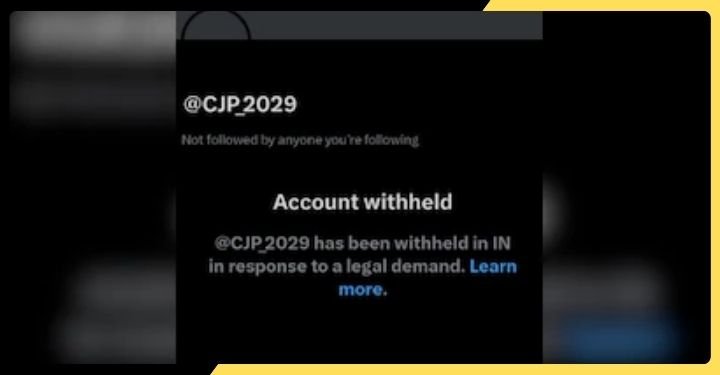

The reported blocking of the satirical X account “Cockroach Janata Party” in India has triggered a fresh debate over freedom of speech and online censorship. The founder of the parody account claimed that Indian users could no longer access the page after it was withheld following a legal demand.
The account had gained widespread popularity for its humorous political content, often using memes, fictional campaign messages, and exaggerated satire to comment on national issues. With thousands of followers regularly engaging with its posts, the page became one of the more talked-about parody handles in India’s political social media ecosystem.
News of the restriction spread rapidly after screenshots of the blocking notice surfaced online. The founder alleged that the account had been targeted because of its satirical criticism of political developments and public figures. Supporters described the move as a dangerous signal for free expression on digital platforms.
Across social media, users debated whether satire should receive stronger protection under democratic principles. Many argued that humor and parody are essential tools for questioning authority and encouraging public discussion. Others pointed out that satire has always been uncomfortable for those in power precisely because it reaches large audiences in relatable ways.
The issue quickly expanded beyond the account itself and became part of a larger conversation about internet governance in India. Over recent years, debates around online content moderation have intensified as governments seek greater control over misinformation, harmful content, and politically sensitive material.
Critics of the restriction argued that parody pages should not face censorship merely for mocking public figures or policies. Several users pointed out that democratic societies thrive when citizens are free to criticize leaders through art, comedy, and satire.
On the other hand, some observers argued that social media satire can sometimes contribute to confusion when users fail to recognize fictional or exaggerated content. They claimed that viral meme pages should still be held accountable if posts create misunderstanding or spread false narratives.
The founder of “Cockroach Janata Party” maintained that the page never pretended to be an official political organization and clearly operated as satire. Supporters echoed this defense, saying audiences were fully aware of the humorous nature of the account’s content.
The controversy also renewed focus on the role of X in handling government requests. Since Elon Musk’s takeover of the platform, debates over free speech and moderation policies have remained intense globally. In India, X has faced multiple legal and political disputes related to content removal orders and compliance obligations.
Digital rights advocates stressed the importance of transparency in such cases. They argued that users deserve clearer explanations regarding why specific accounts are withheld and which laws are being invoked. Without transparency, critics say, public trust in both governments and platforms may weaken.
Meanwhile, the blocking has unintentionally increased attention around the parody account. Archived posts, memes, and screenshots continued circulating widely, with many users sharing old content in solidarity with the founder.
As discussions continue, the “Cockroach Janata Party” controversy has evolved into more than a dispute over one social media account. It now represents a broader debate over satire, political criticism, and the limits of digital free speech in one of the world’s largest online democracies.
