
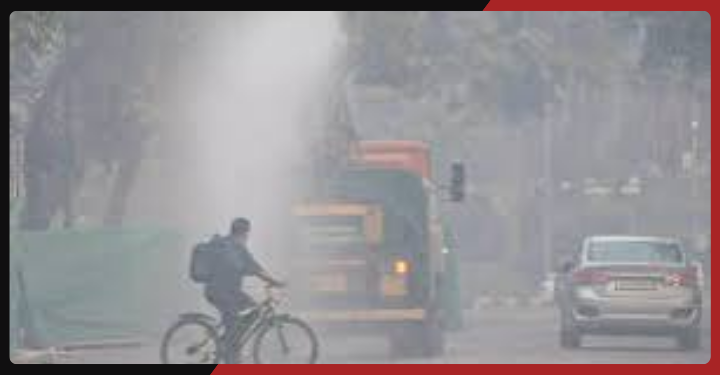

Delhi’s winter pollution strategy will introduce new restrictions on vehicle movement and strengthen enforcement of Pollution Under Control Certificates as authorities prepare for the upcoming pollution season.
One of the key measures will prohibit non-Delhi registered vehicles below BS-VI emission standards from entering the capital from November 1 to January 31. The announced restrictions include exemptions for electric and CNG vehicles, emergency services and other specified categories.
The measure is part of a broader effort to reduce vehicular emissions in Delhi during the winter months. Vehicle traffic is being addressed alongside parking, office commuting and construction activities.
The Delhi government will also strengthen enforcement of the requirement for vehicles to possess a valid Pollution Under Control Certificate. Under the notified framework, fuel stations will be involved in ensuring that vehicles without valid pollution certificates do not receive fuel. The system is expected to be supported by electronic verification and enforcement mechanisms.
Officials have announced an enforcement campaign against end-of-life vehicles as well. Delhi has around 500 petrol pumps equipped with automatic number-plate recognition technology, and authorities have said these systems will be used in the enforcement drive.
The government has also announced a public awareness campaign and plans to upgrade Pollution Under Control centres as part of the wider implementation strategy. The objective is to strengthen compliance rather than rely only on restrictions after pollution levels become severe.
Vehicle measures are being introduced alongside changes designed to reduce the overall number of private trips. Parking charges at authorised parking sites will double from November 1 through February 28. Parking facilities owned and managed by DMRC are exempt from the increased charges.
The government is also introducing a 50% work-from-home arrangement for government and private offices. Under the framework, half of employees will work remotely while the other half attend workplaces. Essential services are exempt because of their operational requirements.
Office timings will also be staggered. MCD offices will work from 8:30 am to 5 pm, while Delhi government offices will operate from 10 am to 6:30 pm. The intention is to spread commuter traffic over different periods of the day.
Construction restrictions will add another layer to the winter strategy. Dust-generating demolition and outdoor civil construction will be prohibited from November 1 to January 31. A complete construction and demolition ban will then apply from December 10 to January 20, subject to stated exemptions.
The government’s framework is designed to operate annually from November 1 to February 28. It will also operate alongside the Graded Response Action Plan, which introduces additional restrictions according to air-quality conditions.
The combination of vehicle restrictions, PUC enforcement, parking measures, workplace changes and construction controls represents a multi-sector approach to Delhi’s winter pollution challenge.
