
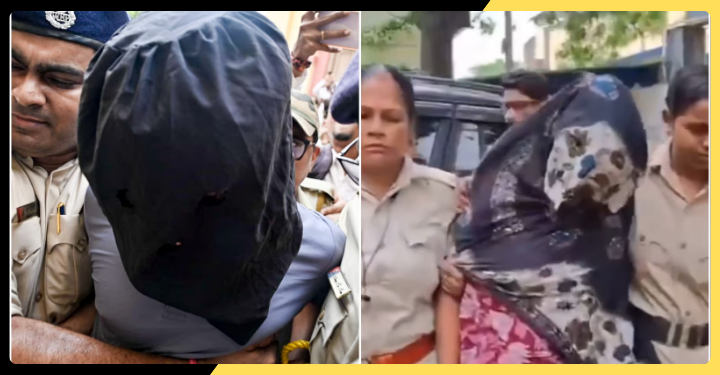

A major counter-terror investigation has taken a dramatic turn after investigators claimed that social media activity linked to the girlfriend of a terror suspect helped expose an alleged plot targeting Delhi’s Jantar Mantar. The case, which is currently under investigation, highlights how digital footprints and online behaviour are increasingly becoming crucial sources of evidence for security agencies working to prevent potential terror attacks.
According to officials familiar with the probe, intelligence agencies had been tracking the suspect for several weeks after receiving inputs regarding his alleged links with extremist elements. While the suspect maintained a relatively low public profile, authorities believed his online communications and personal contacts deserved closer examination. As the investigation progressed, attention shifted towards people in his immediate circle, including his girlfriend, whose online activity reportedly provided investigators with critical leads.
Officials said the girlfriend’s social media accounts initially appeared ordinary, featuring routine photographs, travel updates, and personal posts. However, cyber experts noticed unusual patterns after comparing the online activity with intelligence reports already available to investigators. Certain location tags, repeated visits to sensitive areas, timing of posts, and interactions with accounts under surveillance reportedly raised concerns.
Investigators then carried out an extensive digital forensic analysis of the available information. Specialists examined public posts, metadata, geolocation records, communication history, and other electronic evidence to reconstruct the suspect’s movements and establish whether there were links to extremist planning. The digital analysis allegedly revealed references suggesting that Delhi’s Jantar Mantar was being considered as a possible target.
Jantar Mantar is one of the capital’s most prominent public gathering spots, frequently hosting political protests, demonstrations, and public campaigns. Security agencies consider it a sensitive location because large crowds often assemble there. Officials believed that any planned attack at such a venue could have caused significant casualties and widespread panic.
Once the threat assessment was upgraded, multiple agencies launched a coordinated surveillance operation. Intelligence officers, cybercrime specialists, Delhi Police, and anti-terror units worked together to monitor the suspect’s movements, communication channels, financial transactions, and travel history. Authorities wanted to determine whether the alleged conspiracy was at an early planning stage or closer to execution.
Following weeks of surveillance, investigators detained the suspect during a planned operation. Officials stated that the arrest was conducted peacefully and without posing any risk to the public. Simultaneous search operations were carried out at locations connected to the accused, resulting in the seizure of electronic devices, digital storage media, documents, and handwritten notes.
The recovered materials have been sent to forensic laboratories, where experts are analysing mobile phones, laptops, hard drives, and encrypted messaging applications. Investigators hope the examination will help recover deleted conversations, hidden files, browsing records, and communication logs that may provide additional evidence regarding the alleged terror conspiracy.
Authorities are also investigating whether the suspect acted independently or was part of a wider extremist network. Financial records, bank transactions, travel documents, and online interactions are being examined to identify possible collaborators, sources of funding, and links with organisations operating within or outside India.
The role of the suspect’s girlfriend remains an important aspect of the investigation. Officials have clarified that while her social media activity reportedly helped investigators uncover valuable leads, there is currently no official confirmation that she knowingly participated in any criminal activity. She has been questioned to establish her understanding of the suspect’s activities and determine whether she had any knowledge of the alleged plan.
Legal experts have stressed that investigators must rely on credible evidence rather than assumptions. Appearing in photographs, maintaining a relationship, or interacting online with a suspect does not automatically establish criminal liability. Authorities have therefore urged the public to avoid speculation while the investigation remains ongoing.
Security analysts say the case demonstrates how the nature of counter-terrorism has evolved in the digital age. Traditional intelligence gathering remains essential, but cyber investigations have become equally important. Social media posts, messaging applications, geolocation services, online purchases, and cloud storage often provide investigators with valuable clues that help reconstruct events and identify hidden networks.
Experts also point out that extremist groups increasingly use encrypted communication platforms and online propaganda to recruit supporters and coordinate activities. As a result, digital forensics and cyber intelligence now play a central role in preventing attacks before they can be carried out. Advanced technology enables investigators to recover deleted data, analyse communication patterns, and establish timelines with remarkable accuracy.
Following the suspect’s arrest, security has reportedly been strengthened across several sensitive locations in Delhi. Police have increased surveillance, deployed additional personnel, and reviewed existing security measures at public gathering places to ensure public safety. Authorities continue to monitor potential threats while the investigation progresses.
Officials have emphasised that the investigation is far from complete. More electronic evidence is being examined, additional witnesses may be questioned, and further arrests remain possible if new information emerges. Investigators are also working to establish whether the suspect had direct contact with banned organisations or was influenced primarily through online radical content.
The case serves as a reminder that every digital interaction can leave behind evidence. In today’s interconnected world, social media platforms not only connect people but also create records that may become crucial during criminal investigations. For security agencies, these digital traces have become powerful tools in identifying threats and protecting public safety.
As forensic analysis continues and investigators pursue additional leads, authorities expect to gain a clearer understanding of the alleged conspiracy, its planning, and the individuals involved. The findings are likely to influence future counter-terror operations and reinforce the growing role of digital intelligence in safeguarding national security.