
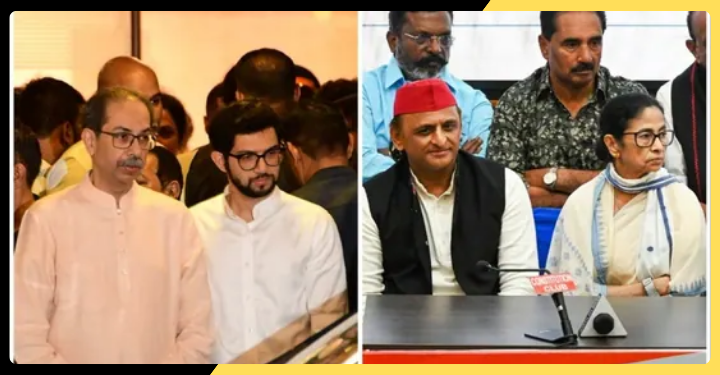

In parliamentary democracies, numbers are often the ultimate measure of political strength. While elections determine the broad composition of legislative bodies, the actual functioning of Parliament depends on party discipline, coalition management, attendance, and voting behavior. Recent signs of dissent within opposition parties such as the Trinamool Congress (TMC) and Shiv Sena (UBT) have once again brought attention to the importance of parliamentary arithmetic and the potential advantages that such developments may create for the National Democratic Alliance (NDA).
The significance of parliamentary numbers extends beyond simple seat counts. Political parties rely on unified voting patterns to support or oppose legislation, influence debates, and shape public policy. When internal disagreements emerge within a party, they can affect attendance, coordination, and decision-making processes. As a result, even a small number of dissatisfied lawmakers can have a disproportionate impact on legislative outcomes.
The current situation involving sections of TMC and Shiv Sena (UBT) highlights this reality. Both parties play important roles within the broader opposition framework. Their ability to contribute effectively to collective opposition strategies depends on organizational unity and disciplined parliamentary conduct. If internal challenges weaken either of these parties, the consequences could be felt across multiple parliamentary platforms.
One of the key reasons parliamentary numbers matter so much is that legislation often depends on narrow margins. While governments may possess comfortable majorities in one house, they frequently need cooperation or at least limited resistance in another. In such circumstances, every vote becomes important. Absences, abstentions, or cross-voting can significantly alter outcomes.
For the NDA, opposition divisions may create opportunities even without attracting formal defections. Parliamentary success is often achieved through strategic management of numbers rather than dramatic political realignments. If opposition lawmakers become less coordinated due to internal disagreements, the ruling alliance may find it easier to secure support for legislative proposals and procedural motions.
The Lok Sabha offers one perspective on this issue. The NDA already enjoys substantial representation in the lower house. However, a fragmented opposition can reduce the intensity of parliamentary challenges. Coordinated opposition strategies often depend on parties acting in unison during debates, question sessions, and voting exercises. Internal dissent can weaken this collective approach.
The Rajya Sabha presents an even more compelling case. Unlike the Lok Sabha, where electoral outcomes can produce decisive majorities, the upper house frequently requires governments to engage in careful political management. Opposition unity becomes particularly important in such situations. If parties struggle to maintain internal discipline, the balance of power can gradually shift in favor of the government.
Attendance also plays a crucial role in parliamentary arithmetic. Important bills are not always decided by headline-grabbing votes. Sometimes outcomes are influenced by who is present in the chamber at a particular moment. Parties facing internal unrest may encounter difficulties ensuring full participation during critical legislative sessions.
Beyond voting, parliamentary committees represent another area where numbers matter. Committees often conduct detailed examinations of legislation and public policy. Their effectiveness depends on active participation from members across political parties. Internal disagreements can reduce focus and weaken opposition influence within these important institutions.
Political perception further amplifies the importance of numbers. A united opposition projects confidence and strength, while visible divisions create questions about leadership and organizational effectiveness. Such perceptions can influence future alliances, public opinion, and even the morale of party workers.
The broader opposition coalition framework may also face challenges if major constituent parties become distracted by internal disputes. Cooperation among opposition parties requires continuous communication and shared objectives. When individual parties are preoccupied with managing internal tensions, collective parliamentary strategies can suffer.
For the NDA, the evolving situation underscores how parliamentary advantages can emerge from political circumstances rather than electoral gains alone. Stability, discipline, and effective floor management often prove just as valuable as numerical strength. A divided opposition can make governance smoother and legislative planning more predictable.
However, political observers caution against drawing premature conclusions. Opposition parties have frequently demonstrated resilience in the face of internal challenges. Strong leadership interventions, organizational restructuring, and renewed political focus can restore unity and improve parliamentary performance.
As Parliament continues to address significant national issues, the importance of numbers is likely to remain at the center of political calculations. The developments within TMC and Shiv Sena (UBT) serve as a reminder that parliamentary power is not determined solely by election results. It is also shaped by discipline, coordination, and the ability of political parties to keep their members aligned with common objectives.
In the end, parliamentary arithmetic remains one of the most decisive factors in democratic governance. As opposition parties navigate internal challenges, the NDA will undoubtedly watch closely, aware that shifts in numbers—however small—can sometimes produce major political consequences.
