
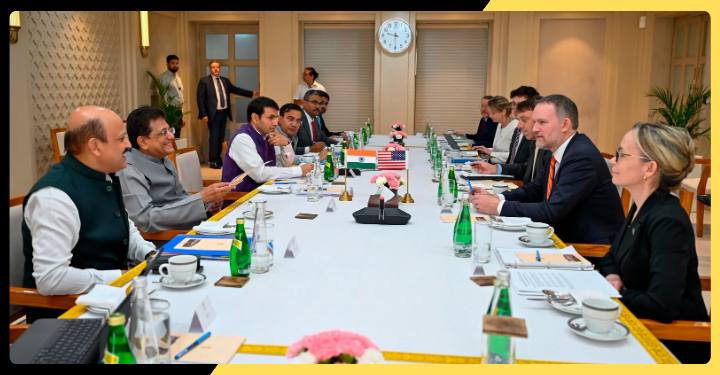

India has stepped up its diplomatic efforts to persuade the United States to withdraw a proposed 12.5% tariff on selected imports, emphasizing that stronger bilateral trade negotiations are the best way to resolve commercial differences. Indian officials have maintained that open dialogue and cooperation will benefit both economies far more than additional trade restrictions, especially at a time when global markets are navigating economic uncertainty.
The proposed tariff has become a key topic in ongoing discussions between trade representatives from both countries. New Delhi has expressed concern that higher import duties could affect exporters, increase costs for businesses, and disrupt supply chains that have become increasingly integrated over the years. Rather than escalating trade tensions, India has called for practical solutions through structured negotiations.
The economic relationship between India and the United States has grown significantly in recent years, making the two countries important trading partners. Bilateral commerce spans a wide range of industries, including pharmaceuticals, engineering goods, information technology, agriculture, textiles, chemicals, renewable energy, and advanced manufacturing. Growing investments and business partnerships have further strengthened commercial ties, creating employment opportunities and supporting economic development in both nations.
Indian policymakers argue that introducing new tariffs could undermine this positive momentum. Exporters have warned that additional duties may make Indian products more expensive in the US market, reducing their competitiveness against goods from other countries. Businesses that rely heavily on exports to the United States could face challenges if buyers shift to alternative suppliers due to higher prices.
Trade organizations across India have welcomed the government’s decision to prioritize negotiations over confrontation. Industry leaders believe that sustained engagement with US officials can help resolve concerns surrounding tariffs, market access, regulatory standards, and customs procedures. They stress that a predictable trade environment encourages businesses to invest, expand operations, and build long-term partnerships.
Economic experts have noted that many American companies also depend on imports from India for manufacturing, retail, healthcare, and technology operations. Higher tariffs could increase costs for these businesses, potentially affecting pricing strategies and profit margins. Consumers may also experience higher prices if additional import costs are passed along through supply chains.
The proposed tariff has also prompted renewed discussions about the need for a comprehensive bilateral trade agreement. Analysts believe that a broader framework could address long-standing issues while providing greater certainty for businesses operating in both countries. Such an agreement could include provisions related to tariff reductions, digital trade, intellectual property protection, investment facilitation, and easier market access.
India has consistently highlighted its commitment to strengthening economic relations with the United States. The two countries have expanded cooperation beyond traditional trade into strategic sectors such as semiconductors, artificial intelligence, clean energy, defense manufacturing, space technology, and critical minerals. These initiatives reflect a shared vision of building resilient supply chains and promoting innovation-driven growth.
Business associations in both countries have urged policymakers to maintain the positive direction of bilateral relations. They believe that trade disputes should be addressed through regular consultations rather than unilateral actions that may create uncertainty for investors. Stable economic policies, they argue, are essential for attracting foreign investment and supporting sustainable growth.
Observers say the ongoing negotiations demonstrate the maturity of the India-US partnership. While differences over trade policies occasionally arise, both governments have repeatedly shown a willingness to engage in constructive dialogue and find mutually acceptable solutions. This cooperative approach has helped resolve previous disagreements and strengthened confidence among businesses and investors.
As talks continue, officials are expected to examine a range of proposals aimed at balancing the interests of both countries. The focus remains on protecting economic growth, encouraging investment, and ensuring that trade continues to expand without unnecessary barriers. Businesses across multiple sectors are closely following developments, hoping that negotiations will produce a positive outcome that preserves market access and supports long-term commercial cooperation.
The outcome of the discussions will have significance beyond the immediate tariff proposal. A successful resolution could reinforce confidence in India-US economic relations, encourage greater cross-border investment, and create new opportunities for businesses in emerging industries. By choosing negotiation over confrontation, both nations have the opportunity to strengthen one of the world’s most important strategic and economic partnerships while promoting stability in the global trading system.
