
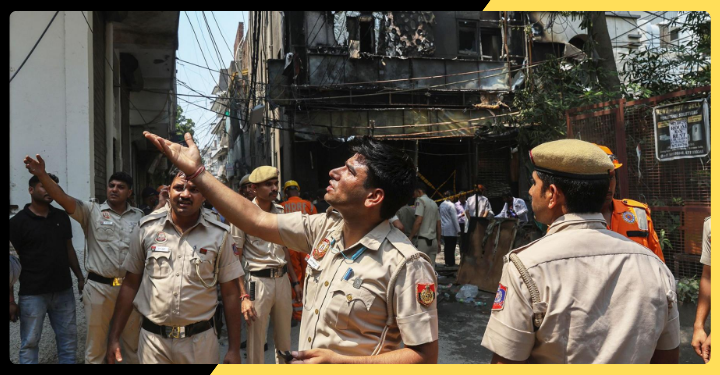

The deaths of at least 21 people in a devastating Delhi fire have sparked renewed concerns about building safety and emergency preparedness across the city. The tragedy, which also claimed the lives of foreign nationals, has prompted authorities to launch investigations while experts call for urgent reforms.
The fire broke out unexpectedly and spread rapidly through the building, leaving occupants little time to react. Witnesses reported seeing flames consume large sections of the structure as thick smoke filled the air. Emergency responders quickly arrived at the scene, but the intensity of the blaze complicated rescue efforts.
Firefighters battled the inferno for several hours, working under hazardous conditions to save lives and prevent the flames from spreading further. Rescue teams evacuated survivors while medical personnel treated the injured nearby. Despite their efforts, many victims could not be saved.
Authorities confirmed that 21 people died in the incident, while numerous others suffered injuries. Hospitals continue to monitor several patients who remain in serious condition. Officials have expressed concern that some survivors may require long-term medical care and rehabilitation.
One of the most significant aspects of the tragedy is the presence of foreign nationals among the victims. Government agencies are coordinating with diplomatic missions to provide information and assistance to affected families abroad.
As investigators examine the scene, attention has shifted toward possible violations of fire safety regulations. Questions have been raised about emergency exits, alarm systems, occupancy limits, and the overall condition of the building. Officials have pledged to identify any lapses that may have contributed to the disaster.
Safety advocates argue that the incident underscores the need for comprehensive inspections and stricter enforcement of regulations. They emphasize that many tragedies can be prevented through routine maintenance, employee training, and proper emergency planning.
The disaster has generated widespread public concern, with residents demanding stronger oversight of commercial and residential buildings. Community leaders have urged authorities to prioritize safety reforms and increase awareness about emergency response procedures.
Government representatives visited the site and assured citizens that a thorough investigation would be conducted. They also announced plans to review safety compliance in similar buildings and consider policy changes aimed at reducing fire risks.
Volunteers and charitable organizations have stepped forward to support victims and their families. Relief efforts include counseling services, financial assistance, temporary housing, and other forms of aid designed to help those affected rebuild their lives.
Experts note that urban centers face unique challenges when it comes to fire prevention due to population density and aging infrastructure. Addressing these issues requires cooperation between government agencies, building owners, and the public.
The Delhi fire tragedy has become a powerful reminder of the importance of preparedness, accountability, and vigilance. While investigations continue, the focus remains on honoring the victims, supporting survivors, and implementing measures that can prevent future disasters.
For many residents, the incident represents more than a single tragedy—it serves as a warning about the consequences of neglecting safety standards. The hope now is that meaningful reforms will emerge from the loss, helping create safer environments for everyone who lives, works, and visits the city.