
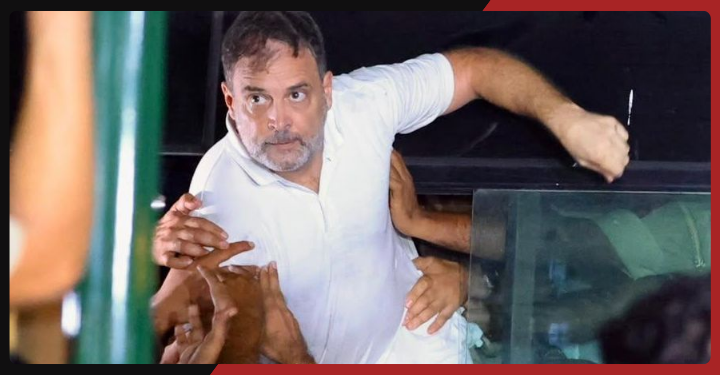

Rahul Gandhi was detained by Delhi Police on October 6 after an opposition demonstration in the national capital demanding the resignation of Chief Election Commissioner Gyanesh Kumar. The Congress leader was among several opposition politicians who participated in a protest centred on concerns over electoral-roll revisions and the functioning of the Election Commission.
The demonstration represented another escalation in the political dispute between opposition parties and the country’s election authorities. Congress and its INDIA bloc partners have been raising questions about the Special Intensive Revision of electoral rolls, arguing that the process requires greater transparency and safeguards for eligible voters.
Gandhi has repeatedly made electoral integrity a major political issue. During the protest, he and other opposition leaders sought to meet representatives of the Election Commission and present their concerns directly. Their demand for a meeting became a central feature of the confrontation after police prevented the march from reaching the Commission’s headquarters.
The protest began with opposition MPs moving towards the Election Commission office. Police had established barricades in the area, resulting in the march being stopped. Gandhi and other leaders continued to press forward, while opposition supporters and lawmakers raised slogans.
The atmosphere became tense as the police cordon prevented the protesters from proceeding. Gandhi was seen at the barricades carrying the national flag. Opposition leaders argued that they should be allowed to reach the Election Commission and submit their concerns.
After the route was blocked, the protest shifted towards Akashvani Bhavan. Gandhi, Priyanka Gandhi Vadra and other opposition MPs participated in a sit-in. The leaders said they would remain there until they were given an opportunity to meet election officials.
The Congress has accused the Election Commission of not adequately responding to concerns surrounding electoral-roll revisions. Gandhi and his party have alleged that legitimate voters could potentially be affected by changes to electoral lists. They have used the phrase “vote chori” as part of their political campaign.
These allegations have been rejected by the Election Commission and the BJP. The poll body has defended the electoral-roll revision process, saying that its purpose is to ensure the accuracy and integrity of voter lists. The BJP has similarly accused the opposition of making politically motivated allegations against an independent constitutional institution.
The Election Commission later issued a statement explaining its position on the proposed meeting. According to the Commission, political parties have established procedures for seeking appointments with election officials. It said that the opposition delegation had proposed meeting at Parliament House Annexe rather than the Commission’s office.
The poll body said it offered an alternative arrangement under which a senior official would receive the opposition’s memorandum. The opposition did not agree to that proposal.
The disagreement over the meeting added to the existing political tensions. Opposition leaders argued that their concerns were serious enough to warrant a direct discussion with the Election Commission’s senior leadership. The Commission, meanwhile, maintained that it was willing to receive the memorandum through an authorised official and that established procedures should be followed.
As the sit-in continued, Delhi Police eventually moved to clear the protest. Rahul Gandhi, Priyanka Gandhi Vadra and other opposition leaders were detained. Reports said the leaders were subsequently released after being taken away from the protest location.
Congress leaders strongly criticised the detentions. They argued that opposition MPs should have been allowed to peacefully express their concerns and accused the authorities of attempting to restrict democratic protest.
The BJP offered a contrasting interpretation, arguing that opposition parties were attempting to create unnecessary confrontation around the Election Commission. BJP leaders defended the poll body’s work and said electoral-roll revisions were necessary to maintain accurate voter records.
The political disagreement also reflects a broader debate about the relationship between India’s electoral institutions and political parties. Elections depend not only on voting but also on accurate electoral rolls, transparent procedures and public confidence in the institutions responsible for administering the process.
For the opposition, the controversy surrounding the electoral rolls has become an important campaign issue. Congress has indicated that it intends to continue raising questions about voter-list changes and demanding accountability from the Election Commission.
For the Election Commission and the government, however, the claims made by the opposition do not establish that the electoral process has been compromised. Officials have continued to defend the procedures being followed.
Rahul Gandhi’s detention therefore represents more than an isolated confrontation between protesters and police. It has become another episode in a wider political battle over electoral transparency and institutional accountability.
The October 6 demonstration ended without agreement between the opposition and the Election Commission. While opposition leaders continue to demand answers and the resignation of Gyanesh Kumar, the poll body has maintained its position and defended its procedures.
The dispute is likely to remain politically significant as opposition parties continue their campaign over electoral-roll revisions. The coming days could see further political mobilisation, parliamentary debate and renewed demands for the Election Commission to respond to the concerns raised by Rahul Gandhi and his allies.
