
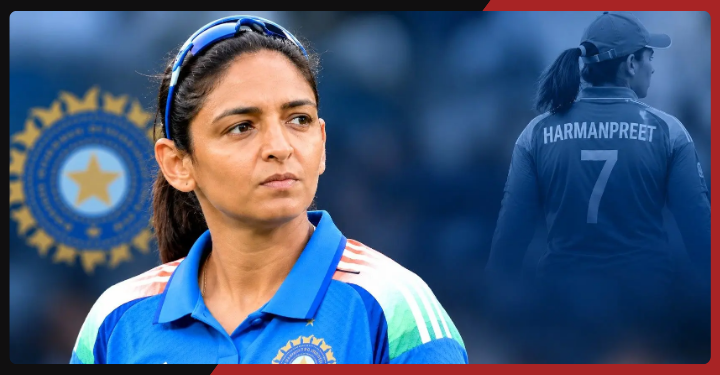

Harmanpreet Kaur’s decision to step down as captain of the Indian women’s cricket team in all formats has created a major turning point for Indian cricket. Her announcement, made after a BCCI review meeting, ends a leadership era that has included historic victories, intense pressure and the rapid transformation of women’s cricket in the country.
The 37-year-old has spent years at the centre of India’s women’s team. She first took charge of the T20I side in 2016 before becoming the full-time captain across ODI and Test cricket following Mithali Raj’s retirement in 2022. Since then, Harmanpreet has been one of the most influential figures in the Indian dressing room.
Her decision is particularly significant because it comes after a period in which expectations surrounding the women’s team have reached unprecedented levels. Indian women’s cricket is no longer viewed simply as a developing sport. It has become a major part of the country’s sporting landscape, with large audiences, professional leagues and increasing international attention.
Harmanpreet was one of the players who helped drive that transformation. Her aggressive batting, competitive approach and willingness to take responsibility made her a natural leader during an important period in the team’s development.
The biggest achievement of her captaincy came when India won the Women’s ODI World Cup. The historic title gave the team a landmark moment and provided confirmation that Indian women’s cricket had developed into a genuine global powerhouse.
Yet the pressures accompanying that success have also been enormous. Once a team reaches the top, expectations change. Supporters begin demanding consistent performances, while every defeat can generate questions about leadership, tactics and selection.
Harmanpreet’s farewell message suggested that she understood those pressures deeply. She reflected on the memories, emotions and sacrifices associated with captaincy and indicated that there were times when she had to place the team’s interests ahead of her own ambitions.
Stepping down could therefore allow her to approach the game differently. Instead of balancing her individual performance with the responsibilities of leading an international side, she can now focus primarily on contributing as a senior player.
That could be beneficial not only for Harmanpreet but also for the team. A captain is constantly required to think beyond personal performance. Removing those responsibilities can sometimes allow an experienced player to rediscover freedom and concentration on the field.
Her decision also gives the BCCI an opportunity to introduce a new leadership structure. Smriti Mandhana, currently one of India’s senior players and part of the leadership group, is among the names expected to attract attention in the captaincy discussion.
A new captain could bring a different approach to communication, tactics and team management. It could also provide younger players with opportunities to assume greater responsibility within the squad.
The transition, however, will have to be handled carefully. Changing the captain of an international team is never a simple administrative decision. The new leader will need the confidence of the players, the support of the coaching staff and a clear understanding of the board’s long-term plans.
The BCCI review meeting in Guwahati was therefore an important moment. BCCI secretary Devajit Saikia, head coach Amol Muzumdar, Harmanpreet and vice-captain Smriti Mandhana were involved in discussions about the team’s direction.
The board will now have to ensure that the leadership transition does not disrupt the team’s momentum. India has built a strong squad, but maintaining success requires constant development and adaptation.
One of the biggest advantages for the incoming captain will be the continued presence of Harmanpreet. She is not retiring and can remain an important source of experience. Her understanding of international cricket and knowledge of the players could help the new leadership group navigate difficult situations.
For younger members of the squad, having a former captain available as a senior teammate could also be valuable. Harmanpreet has experienced the pressure of major tournaments, the disappointment of defeats and the excitement of historic victories.
Her legacy therefore extends beyond the matches India won under her leadership. She was part of a generation that helped establish women’s cricket as a mainstream sporting product in India.
The next phase will require the team to build on that foundation. The objective cannot simply be to replace Harmanpreet. Instead, the challenge will be to create a leadership system capable of taking Indian cricket into its next stage.
For the BCCI, the decision is an opportunity to plan beyond one captain. The board can now develop a broader leadership group involving senior players and emerging talent, ensuring that responsibility is shared across the squad.
For Harmanpreet, meanwhile, the change represents a chance to focus on her own cricket while continuing to contribute to India.
Her captaincy will be remembered as an era of significant change. She led India through difficult moments, celebrated historic victories and carried the expectations of a rapidly growing sport.
Now, Indian women’s cricket must move forward without her at the top of the leadership structure.
The transition will undoubtedly attract attention, but it also presents an opportunity. A new captain, supported by experienced players such as Harmanpreet, could begin another successful chapter.
The most important task will be to ensure that the end of one leadership era becomes the beginning of another — one capable of turning India’s recent achievements into sustained success on the international stage.
