
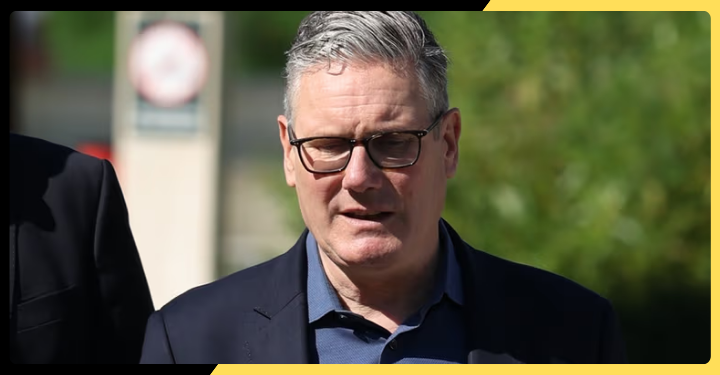

The resignation of Prime Minister Keir Starmer has left the Labour Party facing one of the most important moments in its recent history. While leadership transitions are a normal feature of democratic politics, the departure of a sitting prime minister inevitably raises questions about stability, policy direction, and electoral prospects.
For Labour, the challenge now extends beyond selecting a new leader. The party must also convince voters that it remains capable of governing effectively during a period of significant political change. Starmer’s resignation follows months of speculation about internal disagreements, with some MPs expressing concerns about strategy, policy priorities, and public engagement.
Throughout his leadership, Starmer sought to position Labour as a party of pragmatic reform. He emphasized economic responsibility, investment in public services, and efforts to rebuild trust in political institutions. His supporters argue that these policies helped Labour regain credibility among a broad section of voters. Critics within the party, however, believed that a stronger and more ambitious agenda was needed to address growing social and economic challenges.
These competing perspectives contributed to an increasingly difficult political environment. As divisions became more visible, concerns emerged about Labour’s ability to maintain a united front. The resignation has now brought those concerns into sharper focus.
One of the immediate priorities for Labour will be managing the leadership contest. Party officials are expected to encourage a constructive campaign that focuses on policy ideas rather than personal rivalries. Maintaining unity will be essential if Labour hopes to avoid further political damage.
Several prominent figures are likely to enter the race, each offering a different vision for the future. Some candidates may advocate a continuation of Starmer’s moderate approach, while others could push for more substantial changes in policy and strategy. The outcome will have a major influence on the government’s priorities and political identity.
The uncertainty surrounding the leadership transition has also attracted attention from opposition parties. Rivals argue that Labour’s internal difficulties raise questions about its ability to provide stable governance. Labour leaders, meanwhile, insist that the party remains focused on delivering results for the public.
Beyond Westminster, the resignation has generated widespread public interest. Many voters are eager to understand how the change in leadership could affect key issues such as healthcare, education, housing, and economic growth. Confidence in government often depends on perceptions of stability, making Labour’s handling of the transition especially important.
Business leaders and investors are also closely monitoring developments. Political certainty is often viewed as a critical factor in economic planning, and leadership changes can create temporary uncertainty about future policy decisions. Labour’s next leader will face pressure to reassure markets while maintaining support within the party.
Despite these challenges, some observers believe the transition could provide Labour with an opportunity to renew its message and strengthen its appeal. New leadership often brings fresh energy, different perspectives, and an opportunity to reconnect with voters.
The coming weeks will be decisive. The leadership race will shape public perceptions of Labour and influence the party’s long-term direction. Success will depend on whether Labour can balance internal debate with unity and demonstrate that it remains capable of governing effectively.
As Britain watches closely, Labour faces a defining test. The party’s response to this moment could determine not only its own future but also the broader trajectory of British politics in the years ahead.
