
For thousands of Delhi residents, the Special Intensive Revision of electoral rolls was expected to be a process of verification.
But recent reports suggest that for some voters, SIR became the moment they discovered something far more serious—their names had already disappeared from the electoral rolls.
Nearly 11 lakh Delhi voters were reportedly deleted between January 2025 and June 2026, before the SIR exercise officially began. The revelation has raised concerns because several affected citizens reportedly remained unaware of the deletion for months.
The situation became particularly visible when the SIR enumeration process began.
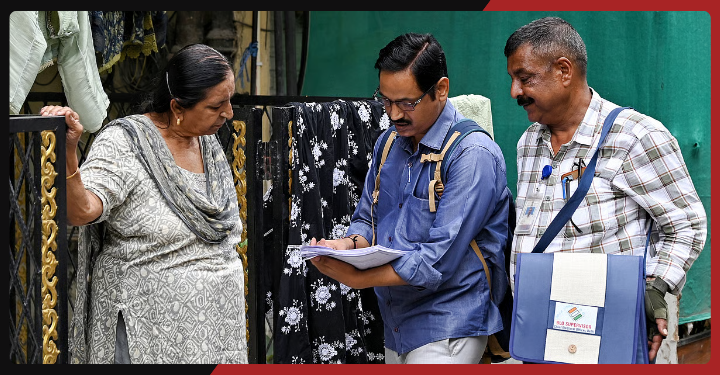
Families in Delhi were approached as part of the large-scale verification exercise, and Enumeration Forms were distributed for existing voters.
But some residents noticed that while their spouses, parents or other family members received forms, they did not.
That was when they began checking their electoral status.
For many people, this was the first indication that their names had already been removed.
The problem illustrates a major weakness in any administrative system: citizens cannot challenge a decision if they do not know that the decision has been made.
Electoral authorities routinely update voter lists. This is necessary to prevent duplicate registrations and remove names of deceased voters or people who have permanently moved away.
However, legitimate voters can also face errors.
A Booth Level Officer may receive incorrect information. A residence may be wrongly classified. A voter may temporarily be unavailable when verification takes place.
Without effective safeguards, such situations can lead to mistaken deletion.
The Election Commission has said that the SIR process is designed with multiple safeguards and opportunities for eligible voters to submit claims and objections.
However, the pre-SIR deletions created a different problem.
If someone was already absent from the electoral database before June 30, the normal SIR process might not automatically include that person.
Reports indicated that Enumeration Forms were not generated in the same way for such voters, creating an additional barrier to re-enrolment.
The controversy comes at a time when Delhi’s entire electoral roll is undergoing enormous changes.
Following the SIR enumeration process, the draft list showed approximately 97.53 lakh electors, down from around 1.45 crore before the revision. Nearly one-third of the previous electorate was not included in the draft list.
The scale of these changes has triggered political debate and public concern.
But beyond political arguments, the experience of individual voters remains central.
For a domestic worker, daily-wage labourer or elderly citizen, discovering that a name has disappeared from the voter list may be especially difficult. Such individuals may not have easy access to websites, digital services or legal assistance.
This makes communication crucial.
A simple SMS alert or written notice could potentially prevent many voters from discovering a deletion only months later.
The nearly 11 lakh deletions have therefore created an important debate about accountability.
Every deletion may have an administrative explanation. But citizens deserve to know when their electoral status changes and why.
As Delhi continues the process of revising its electoral rolls, the biggest challenge will be rebuilding confidence.
A voter list must be clean and accurate—but it must also be transparent enough that no eligible citizen suddenly discovers they have vanished from democracy’s most important register.