
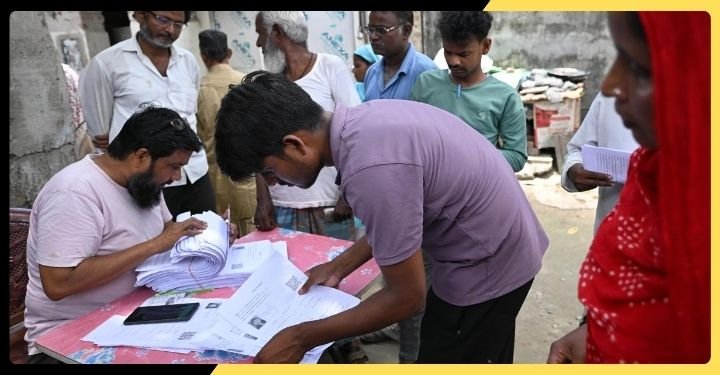

The Supreme Court has upheld the Special Intensive Revision (SIR) exercise, observing that clean and accurate electoral rolls are essential for preserving democratic values in the country. The ruling is being considered a major endorsement of the Election Commission’s efforts to strengthen electoral transparency.
The apex court stated that free and fair elections are impossible without authentic voter databases. According to the bench, periodic verification exercises are necessary to remove duplicate, fake, or outdated entries from electoral rolls.
The SIR exercise had faced legal challenges from political parties and activists who argued that the process might lead to the exclusion of genuine voters. Concerns were particularly raised about migrant workers, economically weaker communities, and individuals lacking proper documentation.
However, the Supreme Court rejected the argument that the exercise was unconstitutional. The judges observed that electoral purification measures are consistent with democratic principles as long as they are implemented fairly and transparently.
The court emphasized that the Election Commission has constitutional authority to supervise elections and maintain the integrity of voter records. The judges said the Commission must be allowed to take reasonable steps to ensure the credibility of the electoral process.
At the same time, the bench instructed authorities to adopt safeguards to protect legitimate voters. Citizens must be given adequate opportunities to verify their records, submit corrections, and appeal against wrongful deletions, the court said.
Election Commission officials welcomed the judgment and reiterated that the revision exercise aims to improve the quality of electoral rolls. Officials explained that large-scale migration, deaths, and duplicate registrations make periodic verification essential.
Political reactions to the verdict remained divided. Supporters of the ruling described it as a strong move against electoral malpractice, while critics warned that implementation challenges could still affect vulnerable groups.
Experts believe the judgment may become a landmark reference in future cases related to electoral reforms. Constitutional scholars noted that the court has attempted to balance electoral integrity with the protection of voting rights.
The Supreme Court also highlighted the importance of transparency and public participation. Authorities were advised to conduct awareness campaigns and simplify procedures so that citizens can easily comply with verification requirements.
Analysts believe the verdict strengthens the Election Commission’s institutional authority while simultaneously placing responsibility on officials to ensure fairness during implementation. The judgment is expected to influence future debates over voter registration systems and election management practices.
India’s electoral process involves hundreds of millions of voters, making accurate voter records both essential and difficult to maintain. Experts say periodic revisions are necessary to prevent disputes and ensure confidence in democratic outcomes.
With the Supreme Court calling the SIR exercise an advancement toward free and fair elections, the verdict is likely to remain central to discussions about electoral accountability and democratic governance in India.
