
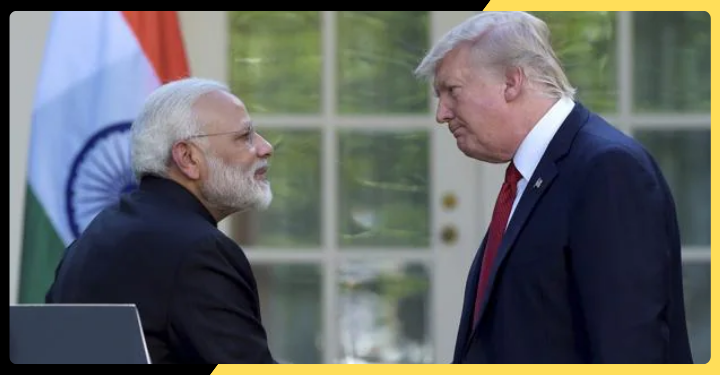

Indian Prime Minister Narendra Modi’s warning about a growing trust deficit ahead of his anticipated meeting with former U.S. President Donald Trump has drawn attention to the diplomatic challenges facing one of the world’s most important bilateral relationships. While India and the United States have significantly expanded cooperation in recent years, evolving geopolitical realities and policy differences continue to test the strength of their partnership.
The relationship between New Delhi and Washington has undergone a remarkable transformation over the past two decades. What was once a cautious engagement has developed into a strategic partnership encompassing defense, trade, technology, energy, and regional security. Both nations recognize the importance of collaboration in addressing global challenges, yet recent developments have highlighted the need for renewed efforts to strengthen trust and understanding.
Modi’s comments suggest that maintaining confidence between international partners has become increasingly difficult in a world marked by rapid political and economic change. Diplomatic relationships today must contend with shifting alliances, regional conflicts, economic competition, and technological disruption. In such an environment, trust is often as valuable as formal agreements and strategic commitments.
One of the key diplomatic challenges involves balancing national interests with shared objectives. India and the United States frequently cooperate on issues related to regional security, economic growth, and technological advancement. However, each country approaches these matters from its own strategic perspective. Differences in priorities can sometimes create uncertainty regarding long-term expectations and commitments.
The Indo-Pacific region remains a central focus of bilateral cooperation. Both India and the United States support efforts to promote stability, economic development, and freedom of navigation across the region. Growing strategic competition among major powers has elevated the importance of partnerships that can contribute to regional security. As a result, closer coordination between New Delhi and Washington has become a significant component of their foreign policy agendas.
Defense cooperation has emerged as a notable success story in the relationship. Joint military exercises, defense technology agreements, and intelligence-sharing initiatives have strengthened strategic ties. India has also expanded defense procurement from American companies, reflecting growing confidence in the partnership. Despite these advances, analysts argue that sustained trust requires consistent engagement and clear communication on security matters.
Economic issues are another area where diplomatic challenges persist. Trade between India and the United States has grown substantially, creating opportunities for businesses and investors on both sides. Nevertheless, disagreements over tariffs, market access, regulatory frameworks, and trade policies have periodically strained relations. Addressing these concerns will likely be a priority during future high-level discussions.
Technology cooperation presents both opportunities and challenges. Emerging sectors such as artificial intelligence, cybersecurity, semiconductor production, and digital infrastructure are becoming increasingly important to national security and economic competitiveness. While both countries seek deeper collaboration in these fields, concerns related to intellectual property, data governance, and technology transfer require careful management.
India’s policy of strategic autonomy continues to shape its diplomatic approach. New Delhi seeks to maintain productive relationships with a variety of global partners while preserving the flexibility to pursue its national interests. This strategy reflects India’s long-standing foreign policy tradition and its desire to avoid dependence on any single power. However, differing expectations regarding international alignments can occasionally contribute to misunderstandings between India and its partners.
Another factor influencing bilateral relations is the changing global economic landscape. Supply chain disruptions, inflationary pressures, and concerns about economic security have encouraged countries to reassess international partnerships. India and the United States both recognize the importance of creating resilient economic frameworks capable of withstanding future challenges.
People-to-people connections remain a powerful source of strength in the relationship. The Indian-American community has played an important role in fostering cultural understanding, educational cooperation, and business engagement. These ties often help maintain positive momentum even when governments face policy disagreements.
Experts believe that Modi’s warning about a trust deficit should be viewed as a call for deeper diplomatic engagement rather than a sign of weakening relations. By openly addressing concerns, both countries have an opportunity to reinforce the foundations of their partnership and prevent misunderstandings from escalating into larger disputes.
As Modi and Trump prepare for discussions, attention will focus on whether both sides can bridge differences while advancing shared interests. Success will depend on their ability to build confidence, strengthen communication, and identify practical solutions to ongoing challenges.
In an increasingly complex world, strong diplomatic relationships require continuous effort. The upcoming talks may serve as a critical opportunity for India and the United States to reaffirm their commitment to cooperation and ensure that trust remains at the center of one of the most consequential partnerships in global affairs.