
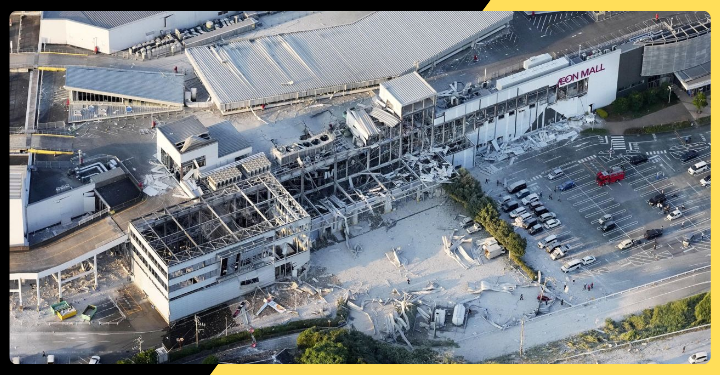

A powerful magnitude 7.1 earthquake struck Japan, triggering widespread destruction before a devastating explosion and partial building collapse at a busy shopping mall transformed the natural disaster into a major emergency. Several people were feared dead, dozens were injured, and many others remained trapped as rescue workers launched an urgent search operation. The tragic incident sent shockwaves across the country, with authorities warning residents to prepare for aftershocks while emergency teams continued working around the clock.
The earthquake struck during one of the busiest hours of the day, when thousands of people were at work, in schools, or shopping. Residents reported feeling violent shaking that lasted for nearly a minute. Tall buildings swayed, shelves collapsed in supermarkets, and traffic came to an abrupt halt as motorists stopped their vehicles to avoid accidents. Across the affected region, people rushed into open spaces, fearing stronger tremors could follow.
Emergency warning systems activated immediately, sending earthquake alerts to millions of mobile phones. Public transportation services, including Japan’s famous high-speed rail network, were automatically suspended in several areas to prevent accidents. Schools evacuated students to designated safety zones, while hospitals activated disaster response protocols.
Just minutes after the earthquake, a powerful explosion tore through a large shopping mall that had already suffered structural damage from the tremors. Witnesses described hearing a loud boom that echoed across the surrounding neighbourhood before thick clouds of black smoke rose into the sky. The blast shattered windows, destroyed storefronts, and caused parts of the building to collapse.
The collapse trapped shoppers, shop employees, and security staff beneath concrete slabs, steel beams, and broken glass. Panic spread rapidly as survivors rushed towards emergency exits while others desperately searched for missing family members. Some people climbed through damaged windows to escape, while others formed human chains to help children and elderly visitors reach safety.
Emergency responders arrived within minutes despite damaged roads and heavy traffic caused by the earthquake. Firefighters immediately began controlling multiple fires inside the shopping complex while specialist urban search-and-rescue teams entered unstable sections of the building. Equipped with thermal cameras, drones, listening devices, and rescue dogs, they searched every corner of the collapsed structure for signs of life.
Rescue operations were extremely challenging because of the unstable condition of the building. Engineers warned that aftershocks could trigger further collapses, placing both trapped victims and rescue workers at risk. Despite these dangers, emergency crews continued carefully removing debris piece by piece using cranes, hydraulic cutters, and heavy lifting equipment.
Medical teams established emergency treatment centres near the disaster site. Ambulances transported injured victims to hospitals across the region, where doctors worked continuously to treat burns, fractures, head injuries, smoke inhalation, and wounds caused by flying debris. Hospitals requested additional medical staff as emergency departments became overwhelmed with casualties.
Authorities confirmed that several people had died in the incident, while many others remained missing. Officials warned that the death toll could rise as rescue teams gained access to previously unreachable parts of the collapsed building. Families gathered outside hospitals and emergency shelters, anxiously waiting for information about loved ones who had not yet been accounted for.
Although investigators have not officially determined the cause of the explosion, preliminary evidence suggests that damaged gas pipelines or electrical systems may have ignited following the earthquake. Experts explained that powerful seismic activity can rupture underground utility lines, creating hazardous conditions that sometimes result in secondary explosions or fires after the initial earthquake has ended.
The Japanese government immediately activated its national disaster management system. Local authorities coordinated closely with firefighters, police officers, emergency medical services, and the Japan Self-Defense Forces to support rescue operations and restore essential public services. Additional rescue teams and specialised equipment were transported from neighbouring prefectures to strengthen ongoing operations.
The earthquake also disrupted transportation and public utilities throughout the affected area. Railway services remained suspended while engineers inspected tracks, tunnels, and bridges for structural damage. Several highways were temporarily closed because of cracked roads and fallen debris, while airport authorities delayed flights until runway inspections confirmed operational safety.
Thousands of households experienced temporary power outages, while gas and water supplies were shut off in damaged districts to prevent further accidents. Telecommunications networks became overloaded as millions attempted to contact relatives, although emergency communication channels continued functioning.
Temporary evacuation shelters were opened in schools, community centres, and public buildings for residents whose homes had been damaged or declared unsafe. Volunteers distributed food, clean drinking water, blankets, clothing, hygiene kits, and essential medicines. Mental health professionals also began providing emotional support to survivors coping with trauma, grief, and uncertainty.
Seismologists warned that strong aftershocks could continue for several days, urging residents to remain cautious and avoid entering damaged buildings until structural inspections were completed. Authorities advised households to keep emergency supplies ready, including food, drinking water, flashlights, batteries, first-aid kits, portable radios, and important personal documents.
As darkness fell, rescue workers continued their search beneath powerful floodlights, listening carefully for voices or movement beneath the wreckage. Every passing hour was considered critical, yet emergency teams remained determined to rescue anyone still trapped.
The disaster has once again highlighted Japan’s resilience in the face of powerful natural hazards. While the nation has some of the world’s most advanced earthquake-resistant infrastructure and emergency response systems, events such as this demonstrate that secondary disasters—including explosions and structural collapses—can dramatically increase the human cost of major earthquakes.
As investigations continue and rescue operations remain underway, the nation mourns the lives lost while hoping that more survivors can still be found. The tragedy serves as a sobering reminder of nature’s unpredictable power and the importance of preparedness, rapid emergency response, and community solidarity during times of crisis.
