
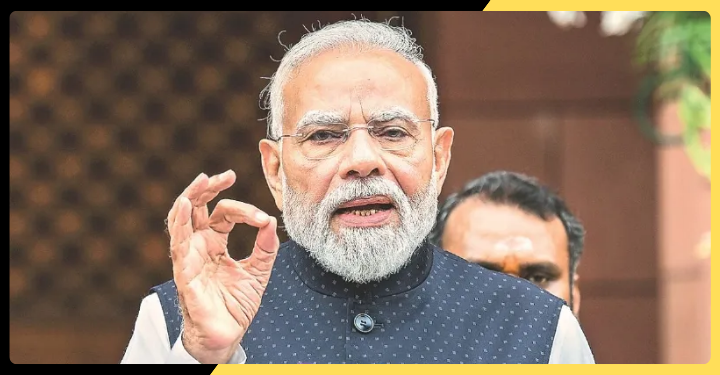

Social media platforms have once again come under the spotlight after the Delhi Police registered a First Information Report (FIR) over allegedly abusive posts targeting Prime Minister Narendra Modi on X, formerly known as Twitter. The police have also sought user information from the platform to identify those responsible for publishing the disputed content, highlighting the growing challenges of policing digital spaces in an era where online conversations can influence public opinion within minutes.
According to officials, the FIR was filed following complaints alleging that several posts on X contained abusive, derogatory, and objectionable remarks directed at the Prime Minister. After conducting a preliminary review, investigators decided that a formal criminal investigation was necessary to determine whether the content violated provisions of the Bharatiya Nyaya Sanhita (BNS), the Information Technology Act, or any other applicable laws governing online communication.
The Delhi Police Cyber Cell has been assigned to investigate the matter. Officers are examining the disputed posts, analysing digital evidence, and working to establish whether the accounts involved belong to genuine individuals or were created using false identities. As part of this process, the police have formally requested X to provide technical details related to the accounts under investigation.
The information sought from X reportedly includes registration details, IP addresses, login history, device information, and other digital records that may help investigators identify the users responsible for posting the content. Such requests are common in cybercrime investigations, where identifying anonymous online users often requires cooperation from internet platforms.
Officials have clarified that the investigation is still in its early stages and that no conclusions have been reached regarding the identity or intent of those behind the posts. They emphasised that the request for user information is an investigative step aimed at gathering evidence rather than determining guilt.
The incident has once again sparked debate about the balance between free speech and responsible online behaviour. Social media has transformed political communication by allowing citizens to express opinions, debate public policies, and directly engage with elected representatives. At the same time, the rapid growth of digital platforms has also led to increasing concerns about online abuse, misinformation, hate speech, fake accounts, and coordinated disinformation campaigns.
Legal experts note that the Constitution of India protects freedom of speech and expression, including the right to criticise governments and political leaders. However, this right is subject to reasonable restrictions under the law. Speech that allegedly amounts to criminal intimidation, incitement to violence, defamation, or other punishable offences may be investigated and prosecuted depending on the facts and applicable legal provisions.
Cybercrime investigators say cases involving social media often require advanced digital forensic analysis. Anonymous accounts, encrypted communications, and virtual private networks can make identifying users more difficult. As a result, investigators rely on metadata, account activity, IP records, and platform cooperation to trace the origin of online content.
The role of social media companies has become increasingly significant in such investigations. Global platforms like X receive legal requests from governments across the world seeking information about users involved in criminal investigations. These companies generally examine each request to ensure it complies with local laws, international legal obligations, and their own internal policies before deciding whether to share user information.
Privacy advocates argue that while law enforcement agencies must have the tools necessary to investigate crimes, user privacy should not be compromised without proper legal safeguards. They emphasise that requests for user information should remain transparent, proportionate, and subject to judicial oversight wherever required by law.
The investigation has also generated political discussion. Supporters of stricter action against abusive online behaviour argue that public discourse should remain respectful and that no individual, including constitutional office holders, should be subjected to unlawful abuse or threats. Others caution that legal action should not discourage legitimate criticism of elected governments or create uncertainty about the exercise of democratic rights.
Experts believe the case reflects broader challenges faced by governments worldwide. As political debate increasingly shifts to digital platforms, authorities must address unlawful online activities without restricting lawful expression. Achieving that balance remains one of the most complex issues in modern cyber governance.
The Delhi Police are expected to continue collecting evidence over the coming weeks. Investigators may analyse additional posts, verify technical information received from X, examine communication records where legally permitted, and identify individuals linked to the accounts under investigation. Depending on the findings, further notices or legal proceedings may follow.
Cybersecurity specialists also stress the importance of public awareness. They encourage users to verify information before sharing it, avoid using abusive language online, and understand that digital platforms are not beyond the reach of the law. Every online activity leaves a digital footprint that can become part of a criminal investigation if laws are allegedly violated.
As the investigation progresses, legal experts, technology companies, policymakers, and civil society organisations are expected to closely monitor developments. The outcome may influence future discussions on cyber law enforcement, platform accountability, and the regulation of online speech in India.
For now, the Delhi Police maintain that the investigation is being conducted strictly in accordance with legal procedures and that all conclusions will be based on evidence gathered during the inquiry. The case serves as another reminder that while social media offers unprecedented opportunities for public engagement, it also carries responsibilities that users must exercise carefully in the digital age.