
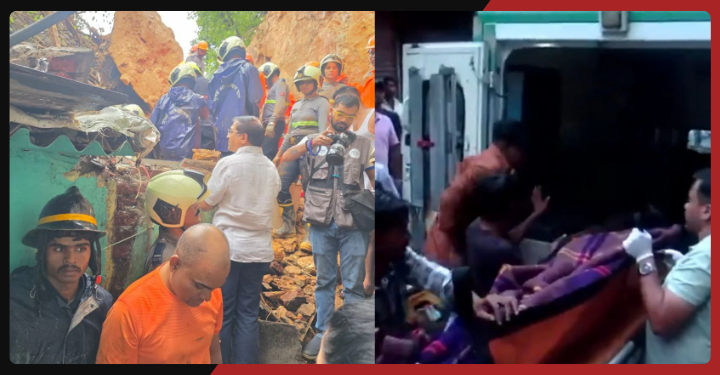

Rescue workers in Mumbai launched a major operation after a landslide struck the Kurla area following heavy rainfall, trapping residents under debris and causing multiple casualties. Initial reports said five people had died and six had suffered injuries. Later updates reported six deaths as emergency personnel continued their search.
The landslide occurred at Gaushiya Chawl in Chirag Nagar, Kurla, during the early hours of Wednesday. Reports said the incident took place around 3:48 am.
The timing of the incident made the rescue operation particularly urgent. Most residents were asleep, and anyone trapped under debris could have been difficult to locate because of darkness, rain and the unstable condition of the site.
Emergency personnel immediately began clearing debris and searching for survivors. The Mumbai Fire Brigade was among the agencies involved in the response.
Rescue operations following a landslide are extremely challenging. Unlike a simple building collapse, loose soil can shift repeatedly, creating additional risks for both victims and rescuers. Rain can make the ground heavier and more unstable, while water may continue flowing through the debris.
Despite these challenges, emergency workers continued their search.
The injured victims were moved to hospitals, where they received medical care. Meanwhile, authorities worked to establish the number of people affected and determine whether anyone remained trapped.
The incident has also highlighted the importance of specialised rescue equipment. Modern rescue teams can use cameras, cutting equipment and other tools to search through debris and identify survivors. In difficult circumstances, such equipment can make the difference between life and death.
The Kurla disaster occurred during a period of heavy rainfall in Mumbai. The city’s monsoon season can produce sudden bursts of intense rain that place pressure on drainage infrastructure and increase the risk of flooding and landslides.
Residents living in vulnerable areas are particularly exposed. Water entering the soil can weaken slopes and increase the possibility of sudden earth movement.
Authorities will now need to examine the location and determine the precise reason for the landslide. They may also have to assess nearby structures and decide whether residents need to be temporarily relocated.
The tragedy also raises the issue of disaster preparedness at the neighbourhood level. Residents need clear information about what to do when heavy rainfall warnings are issued. Emergency shelters and evacuation routes should also be accessible, especially in densely populated communities.
The changing casualty numbers show how difficult it can be to establish the full scale of a disaster in its early stages. The first reports said five people had died and six were injured, while subsequent reporting indicated that six people had died.
For families affected by the incident, the statistics are secondary to the human loss. Relatives waiting outside hospitals and near the disaster site faced uncertainty as authorities worked to identify victims and locate anyone who might still be trapped.
The Kurla landslide is another painful reminder of the dangers that Mumbai residents can face during extreme monsoon weather.
While emergency teams focus on rescue and recovery, the incident is likely to prompt a broader discussion about how the city can reduce landslide risks. Better drainage, slope monitoring, safer housing and timely evacuation could all help reduce casualties when extreme rainfall hits.
