
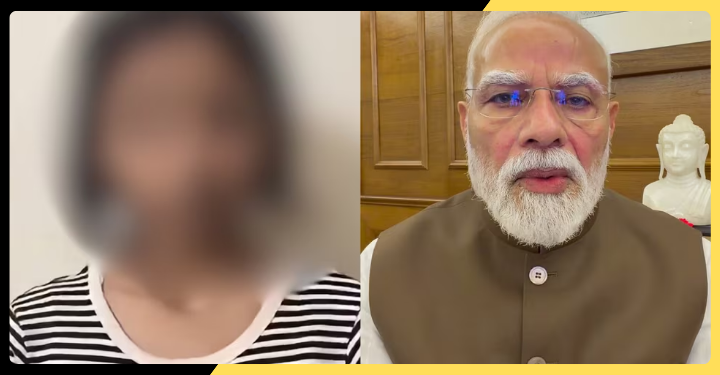

A 15-year-old boy from Noida has unexpectedly become the focus of national attention after a video allegedly showing him using abusive language against Prime Minister Narendra Modi went viral on social media. What began as a short clip shared online soon developed into a major controversy, prompting widespread public debate, legal discussions, and political reactions. Within days, the teenager issued a public apology, saying he deeply regretted his actions and asking the entire nation for forgiveness.
The incident highlights the growing influence of social media in shaping public discourse and demonstrates how quickly a single video can spread across the country. The original clip, which allegedly contained offensive remarks directed at the Prime Minister, was shared extensively on platforms such as X, Instagram, Facebook, and WhatsApp. Thousands of users reposted the video, and it soon became one of the most talked-about topics online.
As criticism intensified, the teenager released another video addressing the controversy. Appearing emotional, he folded his hands before the camera and apologized to the Prime Minister as well as the people of India. “I am sorry to the entire nation. I am just 15 years old. I made a mistake. Please forgive me,” he said. The apology itself quickly went viral, generating another wave of reactions from the public.
Many citizens appreciated the teenager’s willingness to admit his mistake. They argued that acknowledging wrongdoing at a young age reflects responsibility and should be viewed as an opportunity for learning rather than lifelong punishment. Others, however, questioned whether the apology was genuine or simply the result of mounting public pressure and concerns about possible legal consequences.
According to reports, local authorities took note of the matter after receiving complaints regarding the viral video. Since the individual involved is a juvenile, any legal proceedings would be conducted under the provisions of the Juvenile Justice (Care and Protection of Children) Act. The law emphasizes reform, counseling, and rehabilitation rather than punitive measures, recognizing that children often have greater capacity for change and personal development.
Legal experts have pointed out that while the Constitution of India guarantees freedom of speech and expression, this right is not without limits. Speech that is defamatory, incites violence, promotes hatred, or threatens public order may attract legal scrutiny. However, in cases involving minors, the justice system generally seeks to educate and rehabilitate rather than impose harsh penalties.
The controversy has also renewed discussions about responsible online behavior. Experts say social media platforms have made it easier than ever for teenagers to express opinions publicly. While this provides opportunities for creativity and communication, it also increases the risk of impulsive actions leading to widespread consequences. A single video recorded in a few seconds can now reach millions of viewers within hours.
Child psychologists believe adolescence is a period marked by emotional growth and experimentation. Teenagers often act impulsively, influenced by peers, online trends, or the desire for popularity. Many experts argue that while inappropriate conduct should not be ignored, guidance and counseling are usually more effective than severe punishment in helping young people learn from their mistakes.
Education specialists have used the incident to stress the need for stronger digital literacy programs in schools. They believe students should receive education not only about technology but also about respectful communication, cyber laws, responsible content creation, and the importance of verifying information before sharing it. Digital citizenship has become an essential skill in today’s internet-driven world.
Political observers have noted that criticism of political leaders is a normal feature of democracy, but they emphasize that criticism should remain respectful and constructive. Personal abuse often distracts from meaningful discussion and may create unnecessary controversy. The incident has therefore sparked broader conversations about maintaining civility in political discourse, especially on social media.
The rapid spread of the video also demonstrates the power of online platforms. Algorithms that promote trending content often amplify controversial material, allowing videos to reach large audiences before facts are fully verified. This creates challenges for both users and authorities, who must balance free expression with the need to prevent misinformation and offensive content from spreading unchecked.
Parents across India have expressed concern following the controversy. Many believe the incident serves as a reminder that children require greater guidance while using social media. Experts recommend open conversations within families about online etiquette, respectful language, privacy, and the long-term consequences of digital behavior. Monitoring internet activity and encouraging responsible communication can help prevent similar situations in the future.
The case has also highlighted the importance of digital footprints. Once content is uploaded to the internet, it can remain accessible for years, affecting educational opportunities, employment prospects, and personal reputation. For teenagers especially, understanding that online actions have lasting consequences is becoming increasingly important.
Public opinion remains divided. One section believes that offensive remarks directed at the country’s highest elected office deserve firm legal action regardless of the speaker’s age. Another section argues that since the boy is only 15 years old and has publicly apologized, society should allow him an opportunity to learn and move forward. Both perspectives reflect broader questions about balancing accountability with compassion.
Authorities are expected to continue handling the matter according to juvenile justice principles, ensuring that the boy’s legal rights as a minor are protected while also addressing the concerns raised by the public. Any corrective measures are likely to focus on counseling, awareness, and rehabilitation.
Ultimately, the Noida teenager’s apology has become more than a response to one viral video. It has triggered a nationwide conversation about freedom of expression, responsible social media use, parenting in the digital age, and the importance of respectful public dialogue. The controversy serves as a powerful reminder that every online action carries consequences and that even a brief moment of poor judgment can attract nationwide attention in today’s connected world.
