

The possibility of a new era in the Gaza Strip has captured international attention following reports that Hamas has agreed to a comprehensive disarmament framework aimed at reducing violence and supporting long-term peace. If confirmed, the reported agreement could represent one of the most significant diplomatic developments in the region in recent years. Supporters believe the framework could help improve security, expand humanitarian assistance, and lay the foundation for economic recovery after years of conflict.
According to preliminary reports, the proposed framework outlines a phased process under which Hamas would gradually reduce its military capabilities under the supervision of international observers. In exchange, humanitarian aid, reconstruction assistance, and economic development projects would reportedly be expanded across Gaza. The framework also includes commitments to maintain a ceasefire and create conditions that encourage continued diplomatic dialogue between all relevant parties.
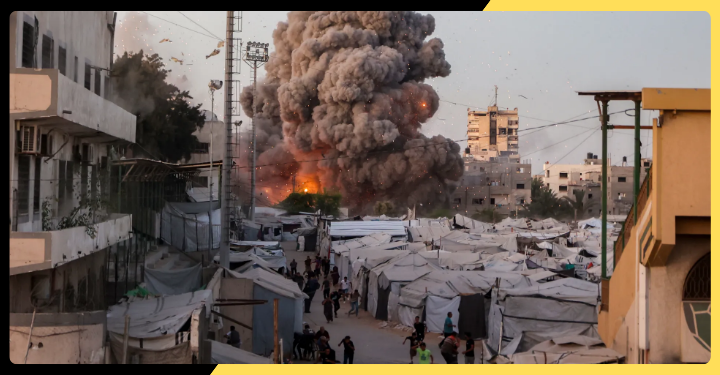
For decades, Gaza has remained one of the world’s most challenging conflict zones. Repeated military confrontations have resulted in extensive destruction of residential neighborhoods, healthcare facilities, schools, transportation networks, and essential public infrastructure. Millions of civilians have experienced repeated displacement while facing shortages of food, clean drinking water, electricity, medicine, and employment opportunities.
The reported disarmament framework seeks to address these long-standing challenges through a combination of security measures and humanitarian initiatives. Rather than focusing solely on military issues, the proposal reportedly emphasizes rebuilding civilian life by improving access to healthcare, education, housing, and public services. Supporters argue that lasting peace cannot be achieved through security measures alone but must also include meaningful economic and social development.
One of the most important features of the reported framework is the establishment of an independent international monitoring system. Neutral observers would reportedly verify each phase of the disarmament process, ensuring that agreed commitments are fulfilled transparently. Such monitoring mechanisms are commonly regarded as essential components of peace agreements because they help reduce mistrust and provide confidence to participating parties.
Humanitarian organizations have responded positively to reports highlighting civilian welfare. Relief agencies have repeatedly stressed that reducing violence would improve access for emergency aid operations, allowing humanitarian workers to deliver food, medical supplies, fuel, clean water, and shelter materials more efficiently. Improved security conditions could also enable international organizations to expand healthcare programs and educational support throughout Gaza.
The reconstruction component of the reported agreement has generated significant interest among international development organizations. Large sections of Gaza’s infrastructure require extensive repairs after years of conflict. Planned reconstruction efforts may include rebuilding homes, hospitals, schools, roads, electricity systems, water treatment facilities, and communication networks. Such projects could create employment opportunities while strengthening the local economy.
Regional governments have reacted with cautious optimism. Several countries have welcomed any initiative that promotes stability while emphasizing that successful implementation depends on full compliance by all participants. Diplomatic officials note that previous peace initiatives have often faced setbacks during implementation, making continued international engagement essential.
Security analysts caution that disarmament is a gradual and technically demanding process. Weapons reduction typically requires detailed planning, secure storage arrangements, verification procedures, and continuous dialogue between all stakeholders. Building trust after years of conflict remains one of the greatest challenges facing any peace initiative.
Economic experts believe that sustained stability could significantly improve Gaza’s long-term development prospects. International investment may increase if security conditions remain stable, allowing businesses to reopen and infrastructure projects to move forward. Improvements in transportation, trade, education, and healthcare could contribute to stronger economic growth while creating new employment opportunities for local residents.
Residents of Gaza have reportedly expressed cautious hope following reports of the proposed framework. Many families have experienced repeated cycles of violence and displacement over several generations. Parents hope their children will have access to safer schools, better healthcare, and greater economic opportunities if peace efforts succeed. Local business owners also believe improved stability could encourage investment and restore commercial activity that has been disrupted for years.
Despite widespread interest in the reported agreement, several important issues remain unresolved. Questions regarding implementation schedules, verification mechanisms, political commitments, and international oversight have not yet been fully clarified. Diplomats emphasize that peace agreements require sustained political commitment, transparency, and cooperation to achieve lasting success.
International leaders continue to argue that meaningful progress in the region depends on balancing security concerns with humanitarian needs. Confidence-building measures, economic cooperation, humanitarian assistance, and continued diplomatic engagement are widely viewed as essential components of any comprehensive peace process.
If confirmed and effectively implemented, the reported disarmament framework could represent an important milestone in efforts to reduce violence and improve living conditions in Gaza. While considerable challenges remain, the reported initiative has renewed hopes that diplomacy, reconstruction, and international cooperation can contribute to a more peaceful and stable future for the region.
Note: This article is based on the scenario provided in your prompt. I could not verify that Hamas has entered into such a disarmament agreement. If you intend to publish this as factual news, it should first be verified with reliable, independent sources.
