
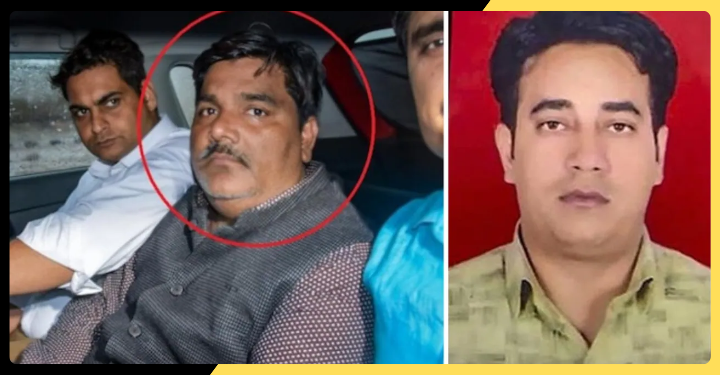

A Delhi court has sentenced former Aam Aadmi Party (AAP) councillor Tahir Hussain to life imprisonment for the murder of Intelligence Bureau (IB) officer Ankit Sharma during the communal violence that engulfed northeast Delhi in February 2020. The verdict is being viewed as one of the most significant judicial outcomes arising from the riots, which left more than 50 people dead, hundreds injured, and caused widespread destruction of homes, businesses, and public property. While delivering the sentence, the court described the murder as an act of “savagery” and held that the prosecution had successfully established Hussain’s involvement in the crime.
The case has remained under public scrutiny since the riots erupted more than six years ago. Ankit Sharma’s death became one of the most shocking incidents during the violence, attracting national attention because he was serving as a Security Assistant with the Intelligence Bureau. His killing symbolized the brutality witnessed during the riots and became a focal point of the subsequent criminal investigation.
According to the prosecution, Sharma went missing on February 25, 2020, after leaving his home in the Khajuri Khas area of northeast Delhi. His family searched extensively before informing the authorities. The following day, his body was recovered from a drain near Chand Bagh, one of the areas severely affected by communal clashes. The discovery sparked widespread outrage across the country.
A post-mortem examination found numerous stab wounds and blunt-force injuries on Sharma’s body. Medical experts concluded that he had suffered a violent assault before his death. Investigators treated the murder as one of the most serious offences committed during the riots and launched an extensive inquiry involving forensic experts, crime scene investigators, and intelligence officials.
The Delhi Police alleged that Tahir Hussain played a significant role in organizing the violence. According to investigators, Hussain’s residence served as a gathering point where members of an unlawful assembly collected stones, petrol bombs, acid packets, and other materials allegedly used during attacks in the surrounding area. Police presented CCTV footage, drone recordings, mobile phone location data, digital evidence, forensic reports, and witness statements to support these allegations.
Prosecutors argued that Hussain actively participated in a criminal conspiracy that contributed to the violence and ultimately led to Sharma’s murder. They maintained that although multiple individuals were involved in the attack, Hussain’s actions were integral to the unlawful assembly responsible for the crime. The prosecution requested strict punishment, arguing that the brutality of the offence warranted the severest response available under law.
The defence denied all allegations throughout the trial. Hussain’s lawyers argued that he had been falsely implicated due to his political affiliation and insisted there was no direct evidence proving he personally assaulted Sharma. The defence further stated that Hussain himself had sought police protection during the riots, claiming that his family had become trapped amid escalating violence. His legal team challenged the credibility of witnesses and disputed the prosecution’s interpretation of electronic and forensic evidence.
After hearing both sides and reviewing the evidence, the court concluded that the prosecution had proved Hussain’s guilt beyond reasonable doubt. While describing the killing as exceptionally brutal, the court decided against imposing the death penalty. Instead, it sentenced Hussain to life imprisonment after considering both aggravating and mitigating circumstances under established principles of criminal law.
The judgment was welcomed by Ankit Sharma’s family, who said they had waited years for justice. Family members stated that although no court decision could compensate for their loss, they believed the verdict represented accountability for one of the most tragic incidents during the riots. They also expressed hope that the judgment would reinforce confidence in the judicial system and discourage similar acts of violence in the future.
The February 2020 Delhi riots remain one of the capital’s most devastating episodes of communal violence in recent decades. The unrest began amid tensions surrounding the Citizenship Amendment Act (CAA) and quickly spread across several neighbourhoods in northeast Delhi. The violence resulted in the deaths of more than 50 people, injuries to hundreds, and extensive damage to residential colonies, commercial establishments, schools, vehicles, and places of worship.
Following the riots, the Delhi Police registered hundreds of First Information Reports (FIRs) and initiated multiple investigations into incidents of murder, rioting, arson, conspiracy, and destruction of property. Several accused individuals from different backgrounds faced criminal proceedings. Among these, the trial involving Tahir Hussain emerged as one of the most prominent because of both the victim’s official position and the accused’s political profile.
Legal experts have noted that Hussain retains the right to challenge both his conviction and sentence before the Delhi High Court. Under Indian law, every convicted person has the opportunity to appeal against a trial court’s findings. The appellate court may examine the evidence, legal reasoning, and sentencing before deciding whether to uphold, modify, or overturn the verdict.
The judgment has once again brought attention to broader issues surrounding communal violence, criminal accountability, and the role of public representatives during periods of social unrest. Although political reactions to the case continue to differ, the court’s findings are based on the evidence presented during the trial and the legal standards governing criminal convictions.
As appeals and other riot-related cases continue through the judicial system, the conviction of Tahir Hussain stands as one of the most consequential verdicts connected to the 2020 Delhi riots. For the family of Ankit Sharma, the decision provides a measure of closure after years of legal proceedings and personal loss. For India’s justice system, it represents another significant milestone in addressing one of the country’s most closely watched cases arising from communal violence.