
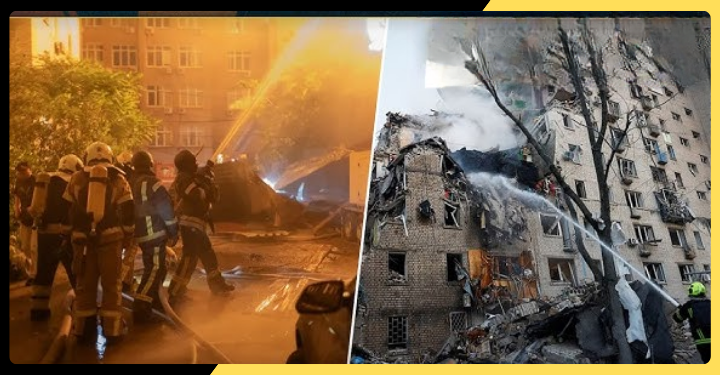

The deadly missile and drone attack on Kyiv prompted swift international reactions, with governments and global organizations condemning the assault and expressing solidarity with Ukraine. The strike, which killed at least eight people and injured dozens more, renewed concerns about the continuing humanitarian toll of the war and the need for sustained diplomatic, military, and humanitarian support.
Within hours of the attack, leaders from Europe, North America, and other regions issued statements expressing condolences to the families of the victims and condemning the targeting of civilian areas. Several governments reaffirmed their commitment to supporting Ukraine’s sovereignty and territorial integrity while calling for an end to attacks that endanger civilian lives.
Ukrainian President Volodymyr Zelenskyy thanked international partners for their continued assistance but emphasized that the latest strike demonstrated the urgent need for stronger air defense capabilities. He said additional missile defense systems, interceptor missiles, and military cooperation would help Ukraine better protect its cities from future large-scale attacks. Ukrainian officials have consistently argued that enhanced defensive support is essential to reducing civilian casualties and limiting damage to critical infrastructure.
The attack also sparked renewed discussions among Ukraine’s allies about accelerating military aid deliveries. Defense officials from several countries indicated they would continue working with international partners to strengthen Ukraine’s defensive capabilities, particularly in the areas of air defense, intelligence sharing, and military training. While specific policy decisions vary by country, many governments reiterated their long-term commitment to assisting Ukraine.
International humanitarian organizations also responded by increasing emergency assistance for communities affected by the strike. Relief agencies coordinated with Ukrainian authorities to provide medical supplies, temporary shelter materials, food, clean water, and psychological support for displaced families. Aid workers noted that repeated missile attacks have placed additional pressure on humanitarian operations, particularly in urban areas where residential neighborhoods continue to be affected.
The latest assault has once again drawn attention to the broader humanitarian impact of the conflict. Millions of Ukrainians have experienced displacement, loss of housing, disruption to education, and reduced access to healthcare since the war intensified. International organizations continue to warn that ongoing attacks on civilian infrastructure increase the challenges faced by vulnerable populations, including children, elderly people, and individuals with disabilities.
Global financial institutions and development agencies have also continued discussions regarding Ukraine’s long-term recovery and reconstruction. Even as active fighting continues, planning efforts remain focused on rebuilding damaged infrastructure, restoring essential public services, supporting economic recovery, and assisting communities heavily affected by the conflict. Experts estimate that reconstruction will require significant international cooperation and long-term investment.
The United Nations and several international organizations have repeatedly emphasized the importance of protecting civilians during armed conflict. Humanitarian officials continue to call for respect for international humanitarian law and for measures that reduce risks to non-combatants. They have also stressed the importance of ensuring that emergency responders and humanitarian workers can safely access affected communities following major attacks.
The latest strike has reinforced concerns about regional and global security. Analysts note that continued instability in Ukraine affects international energy markets, food supplies, trade routes, and broader geopolitical relations. As a result, many governments remain actively engaged in diplomatic consultations aimed at managing the wider consequences of the conflict while supporting humanitarian relief efforts.
Public demonstrations of solidarity with Ukraine were reported in several countries following news of the attack. Community groups organized candlelight vigils, fundraising campaigns, and humanitarian initiatives to support civilians affected by the ongoing war. Ukrainian diaspora communities also continued efforts to raise awareness and collect donations for emergency assistance and reconstruction projects.
Despite widespread international condemnation, prospects for an immediate diplomatic breakthrough remain uncertain. Governments continue to encourage dialogue and peaceful solutions while acknowledging that significant political and military differences remain unresolved. In the meantime, humanitarian support and defensive assistance continue to form the cornerstone of many countries’ responses to the conflict.
As Kyiv begins recovering from another devastating attack, the international community faces the continuing challenge of balancing immediate humanitarian needs with long-term efforts to promote peace and stability. For Ukraine, the latest expressions of global support provide reassurance that its partners remain engaged, even as the conflict enters another difficult phase marked by ongoing missile attacks, civilian suffering, and persistent uncertainty about the path toward a lasting resolution.
