
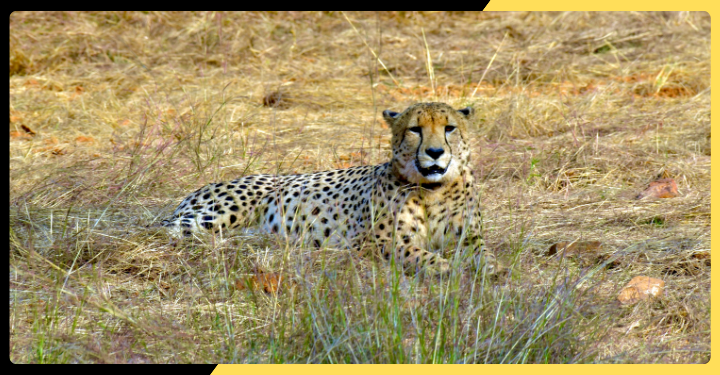

India’s dream of restoring cheetahs to its forests has suffered another setback after four cubs were found dead in Kuno National Park. The cubs, born only a month ago, were part of the country’s ambitious Project Cheetah initiative.
Officials confirmed that the cubs were discovered during routine tracking and surveillance operations conducted inside the national park. The young animals were born to a female cheetah relocated from Africa as part of the programme aimed at reintroducing the species into India.
Initial reports indicate that harsh weather conditions, weakness, or possible health complications may have caused the deaths. However, forest authorities said a complete veterinary investigation is underway and conclusions would only be drawn after detailed post-mortem examinations.
The incident has sparked renewed concern over the long-term viability of the cheetah project. Since the launch of the initiative, multiple cheetahs have died due to various reasons including infections, injuries, and adaptation-related stress.
Supporters of the programme argue that setbacks are natural in wildlife conservation efforts, especially during the early stages of reintroduction. They point out that cub mortality rates in wild cheetah populations are generally high even in Africa.
Critics, however, believe the repeated deaths reflect deeper structural challenges. Wildlife scientists have questioned whether the ecosystem at Kuno National Park is sufficiently equipped to sustain a growing cheetah population under Indian climatic conditions.
The birth of the cubs had earlier been celebrated as a historic achievement for the programme. Conservation officials had described the event as evidence that the animals were adapting successfully to their new habitat.
Project Cheetah marked the first international translocation of large carnivores into India. The initiative was presented as a bold ecological experiment designed to restore grassland ecosystems and increase biodiversity.
Despite the optimism surrounding the programme, experts have consistently warned that introducing a species into a landscape where it has been absent for decades involves significant risks. Habitat fragmentation, climate stress, and competition with existing predators remain major concerns.
The latest deaths are expected to intensify calls for improved scientific oversight and habitat management. Conservationists are urging authorities to strengthen veterinary care, enhance monitoring systems, and prepare emergency response plans for extreme weather conditions.
Public reaction has been mixed, with many expressing sadness and frustration over the losses. Social media platforms witnessed widespread discussion after the news emerged, with several users questioning whether the programme was progressing too quickly.
Government officials continue to defend the initiative, describing it as a long-term conservation mission that will evolve with experience and research. Authorities say lessons learned from each setback are being incorporated into future planning.
The deaths of the four cubs underscore the fragile nature of wildlife restoration projects and the complexities involved in bringing back a species once declared extinct in India. As investigations continue, the future direction of Project Cheetah is likely to remain under close public and scientific scrutiny.
