
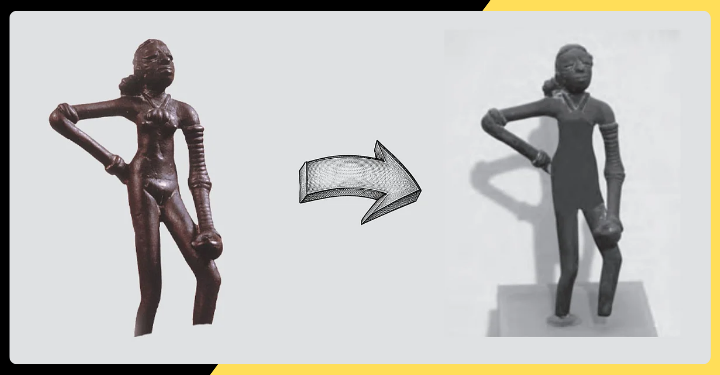

The release of NCERT’s new Class 9 art textbook has sparked widespread discussion after readers noticed changes in the presentation of the renowned Dancing Girl sculpture from the Indus Valley Civilization. The image, which appears with additional shading, has become the focus of conversations about historical representation, educational publishing, and the preservation of cultural authenticity.
The Dancing Girl is one of the most celebrated artifacts associated with the ancient Indus Valley Civilization. Discovered in Mohenjo-daro during archaeological excavations in the early twentieth century, the bronze figurine has come to symbolize the artistic and technological achievements of one of humanity’s earliest urban cultures. Despite its small size, the sculpture is admired for its expressive posture, realistic detailing, and remarkable craftsmanship.
As educational institutions update textbooks to reflect new curricula and teaching methods, visual content often undergoes redesign. Publishers may modify images to improve clarity, adapt them for printing requirements, or create a more consistent visual experience for students. In the case of the Dancing Girl, supporters of the textbook revision argue that shading may have been introduced to enhance readability and emphasize details that might otherwise be difficult to observe.
Nevertheless, the modification has prompted concerns among some historians and heritage enthusiasts. They contend that artifacts of major historical importance should be reproduced with minimal alteration. Authentic representation, they argue, helps students develop an accurate understanding of archaeological discoveries and encourages respect for original historical sources.
The discussion reflects a broader challenge faced by educational publishers worldwide. Historical images must often be adapted for textbooks, digital platforms, and classroom materials. At the same time, educators are expected to preserve the integrity of cultural artifacts while making them accessible to young learners. Striking the right balance between these objectives is not always straightforward.
The Dancing Girl occupies a unique place in South Asian history. Created around 2500 BCE, the figurine showcases advanced metalworking skills and artistic sophistication. Archaeologists believe it was produced using the lost-wax technique, a process that requires significant technical expertise. The artifact has therefore become an important symbol of the creativity and innovation of the Indus Valley people.
Beyond the immediate debate, the attention surrounding the textbook has encouraged renewed interest in ancient Indian history. Public discussions about archaeological artifacts can inspire students and readers to explore museums, academic research, and heritage sites. Such engagement contributes to a broader appreciation of the civilizations that shaped the subcontinent’s cultural legacy.
Experts note that educational materials carry considerable influence because they introduce young learners to foundational historical concepts. Images, in particular, help shape perceptions and often leave lasting impressions. Consequently, decisions about visual representation can attract scrutiny, especially when they involve iconic symbols of national heritage.
NCERT’s latest textbook revision highlights the importance of ongoing dialogue between educators, historians, designers, and the public. Collaborative approaches can help ensure that educational resources remain both academically reliable and visually engaging. Transparency regarding editorial and design choices may also strengthen trust in educational publications.
While opinions remain divided over the significance of the shaded image, the discussion has reaffirmed the enduring importance of the Dancing Girl in India’s cultural narrative. More than four thousand years after its creation, the sculpture continues to captivate audiences and inspire conversations about history, identity, and artistic achievement. The textbook controversy demonstrates how even small changes in the presentation of historical artifacts can generate meaningful debate about the ways societies preserve and communicate their past.
