

The latest U.S.-Iran military confrontation is creating fresh concerns for the global economy as oil prices climb and traders worry about the security of energy shipments through the Middle East.
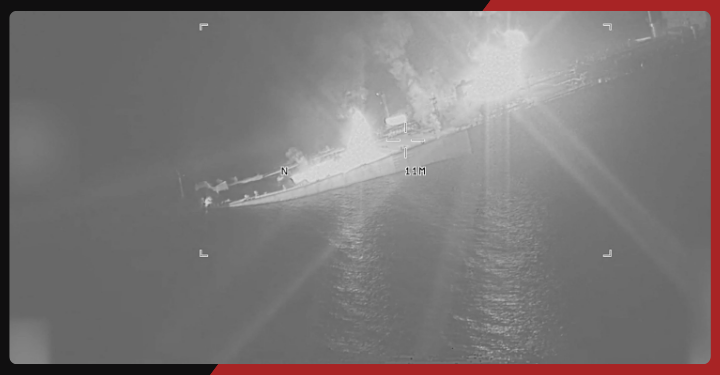
The immediate trigger was a series of military exchanges involving American warships, Iranian forces and oil tankers. The United States announced that it had destroyed five Iranian crude carriers after Iranian missile attacks against a U.S. Navy warship.
Iran responded with missile attacks against U.S. positions in Jordan and additional threats against shipping around the Strait of Hormuz.
The Strait is crucial to the global energy market. A significant volume of crude oil and petroleum products moves through the waterway every day.
Any sustained interruption could therefore have consequences for fuel markets across Asia, Europe and other regions.
Financial markets reacted quickly. Brent crude rose above $100 per barrel amid concerns about possible disruptions to oil supplies.
The rise highlights the sensitivity of energy markets to geopolitical developments. Even before physical supplies are affected, traders often increase prices because they anticipate potential shortages or higher transportation costs.
The current situation is particularly concerning because the conflict involves both military assets and commercial shipping.
Iran’s Revolutionary Guard has warned ships operating in areas near the Strait of Hormuz and claimed attacks against American vessels and oil tankers.
The United States, meanwhile, has demonstrated its willingness to target Iranian oil carriers.
Washington says the tankers were linked to an oil-financing network supporting Iran’s Revolutionary Guard. From the American perspective, targeting these vessels is intended to reduce Tehran’s ability to fund military activity.
But the strategy carries economic risks.
If Iran responds by targeting commercial shipping, global energy prices could rise further. Shipping companies may also seek alternative routes or avoid certain areas entirely.
For countries that import large quantities of crude oil, prolonged instability could create additional economic pressure.
India, China, Japan, South Korea and European economies all watch developments in the Gulf closely because changes in crude prices can influence inflation, transport costs and industrial production.
The situation also has implications for the United States itself. Higher oil prices can affect American consumers through increased gasoline and transportation costs.
The possibility of a prolonged conflict is therefore a concern for governments far beyond Washington and Tehran.
The military dimension is equally important. Iran has demonstrated that it can threaten American naval assets and regional bases, while the United States possesses significantly greater conventional military capabilities and has shown that it can strike Iranian economic infrastructure.
This creates a dangerous balance in which both countries can impose costs on the other.
The key question is whether the latest exchange remains limited or develops into a wider campaign.
A prolonged blockade or serious disruption of the Strait of Hormuz could be especially damaging. Even a temporary closure could cause major uncertainty in energy markets.
Diplomatic efforts may therefore become increasingly important. Regional governments have strong incentives to prevent the conflict from spreading.
The latest oil-price movement is a warning that the economic consequences of the war are no longer confined to the countries directly involved.
If military operations continue, the world could face a combination of higher oil prices, rising shipping costs and increased market volatility.
The destruction of five tankers may have been intended as a targeted military response, but its consequences are being felt across the international energy system.
