
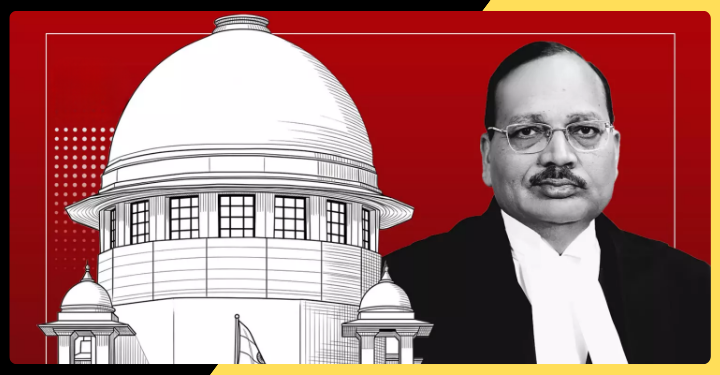

The Supreme Court has made it clear that injuries suffered by protesters and police personnel must be viewed with equal concern while examining allegations of violence during demonstrations. The observation came during the hearing of petitions relating to alleged excessive police force against students protesting over examination irregularities.
A bench headed by Chief Justice Surya Kant, comprising Justices Joymalya Bagchi and V. Mohana, said that the right to peaceful and lawful protest is constitutionally protected. At the same time, the bench also acknowledged that police officers can become victims of violence during demonstrations.
This balanced position is important because public protests often produce sharply different accounts. Protesters may claim that they were subjected to excessive force, while police authorities may state that officers were attacked or that force was necessary to control an escalating situation.
The Supreme Court has indicated that both claims deserve examination. It is not enough to simply determine whether protesters were injured. The conduct of demonstrators, the actions of police personnel and the sequence of events must all be investigated.
The court’s observation regarding police equipment is also significant. Justice Joymalya Bagchi questioned whether police personnel were provided adequate protective equipment while dealing with protests. Helmets and other safety gear could help protect officers and potentially reduce the need for aggressive intervention.
At the same time, the court emphasised that the mere fact that an agitation is taking place cannot justify lathi-charge. This establishes a clear principle: the police must respond to actual conduct and genuine threats, not simply to the existence of dissent.
The issue is particularly important in student protests. Young people often take to the streets because they believe their future is affected by examination decisions. Allegations of paper leaks, irregularities or unfair examination procedures can create enormous anxiety among students and families.
When such protests occur, authorities face the challenge of maintaining order while ensuring that legitimate concerns are not suppressed. The Supreme Court’s observations suggest that the answer lies in discipline and restraint.
Protesters must remain peaceful and avoid attacking police personnel or damaging public property. Police officers, in turn, must follow professional procedures and avoid disproportionate force.
The court has also indicated that allegations of police excess should be independently examined. This could involve reviewing videos, CCTV recordings, medical reports, witness accounts and other evidence.
The call for uniform protocols may further help ensure that police responses are consistent across different states and cities. Clear rules could reduce uncertainty and create greater accountability.
The larger message from the Supreme Court is that democracy cannot be viewed as a conflict between citizens and the state. Both citizens and public institutions have responsibilities. Protesters must respect the law, while authorities must respect constitutional rights.
The proceedings are therefore likely to remain important not only for the students involved but also for future demonstrations across the country. The final outcome could shape how India approaches the difficult question of managing public dissent while protecting the safety of everyone involved.