
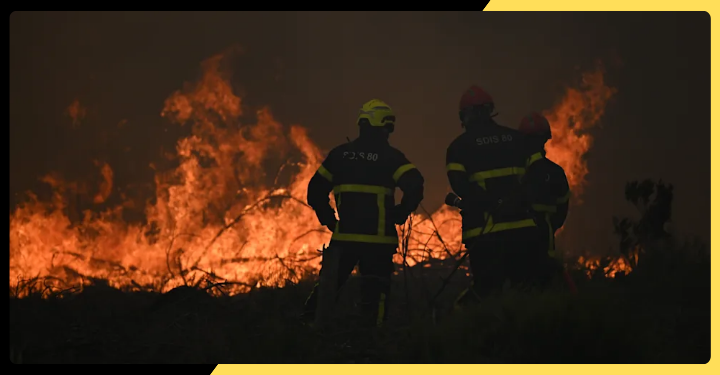

France is battling a massive wildfire disaster that has forced hundreds of thousands of people to evacuate and pushed emergency services to their limits. In the latest escalation, another 55,000 people were ordered to leave their homes as the fire continued to spread across southwest France.
The main fire is burning in the Gironde region, close to the Bordeaux area. The total number of people displaced from the affected fire zone has risen to around 220,000. The scale of the evacuation has been described as extraordinary, with entire communities forced to leave because of the rapidly changing fire conditions.
One of the most frightening features of the disaster has been the appearance of fire whirlwinds. These are rotating columns of hot air, flames and smoke that can form during intense wildfires. They can generate powerful winds and make the fire front extremely difficult to predict.
For firefighters, the conditions are extremely challenging. Dry forests provide fuel, while strong winds can push flames across large areas in a short time. The heat also makes it difficult for crews to remain close to the fire for long periods.
Firefighting teams have been working around the clock. Water-bombing aircraft have been deployed, while thousands of firefighters and additional military personnel are supporting the operation. Emergency authorities have also been preparing shelters for people forced to leave their homes.
Many evacuees have described the experience as frightening and chaotic. Some residents left with only a few possessions. Others were forced to move again after the fire changed direction or smoke conditions worsened.
The situation has also created serious challenges for transport and emergency planning. Roads can become congested when thousands of people attempt to leave at the same time. Authorities must balance the need to evacuate people quickly with the need to keep routes open for fire engines and emergency vehicles.
Smoke is another major concern. Thick smoke can reduce visibility, affect air quality and create health problems. Authorities have advised people in affected areas to limit outdoor activity and protect themselves from smoke exposure.
The fire comes during a summer marked by extreme heat across Europe. France has experienced temperatures significantly above normal, and long periods of dry weather have left forests highly vulnerable.
The crisis has also raised wider questions about how European countries prepare for increasingly severe wildfire seasons. Firefighters are facing fires that are larger, faster and more unpredictable than many previous incidents.
The current emergency shows how quickly a natural disaster can transform into a humanitarian crisis. A wildfire can destroy forests, but the impact also reaches homes, transport networks, tourism, businesses and public health.
For now, firefighters are continuing their battle against the flames. Authorities are monitoring wind conditions closely, because even a temporary improvement can be quickly reversed by another period of strong winds.
The priority remains protecting lives. Residents in threatened areas are being urged to follow evacuation instructions immediately. With fire conditions changing rapidly, delaying evacuation can create serious danger.
France’s wildfire emergency is a powerful reminder that extreme weather can turn a familiar summer landscape into a dangerous disaster zone within hours.
