
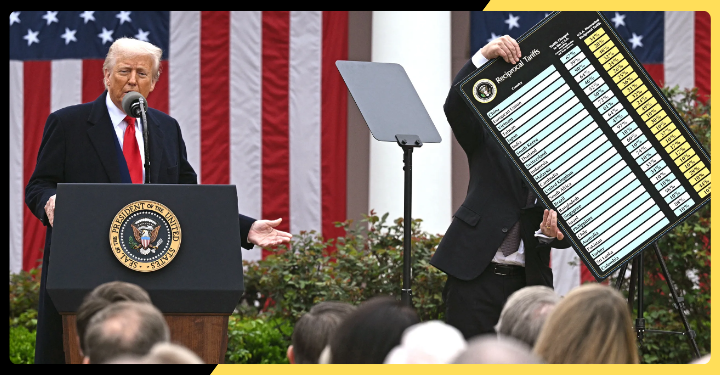

A major legal confrontation is unfolding in the United States after a coalition of 25 states filed a lawsuit against the Trump administration over its latest round of tariffs on imports from numerous trading partners. The case, filed in the U.S. Court of International Trade, has reignited debate over the balance of power between the White House and Congress in shaping trade policy. It also raises broader questions about the economic impact of tariffs on American businesses, consumers, and global trade relations.
The Trump administration recently announced a new package of tariffs affecting goods imported from nearly 60 countries and territories. Officials said the measures are intended to protect American industries, counter unfair trade practices, and pressure foreign governments to eliminate forced labor from global supply chains. The administration argues that stronger trade enforcement is necessary to safeguard American workers and reduce the country’s dependence on overseas manufacturing.
However, the coalition of states challenging the policy believes the administration has acted beyond its legal authority. In the lawsuit, state attorneys general argue that the new tariffs are an attempt to revive trade restrictions that federal courts had previously ruled unlawful. Although the administration relies on a different legal provision than in earlier cases, the plaintiffs claim the overall policy remains substantially similar and therefore violates established legal limits on presidential power.
The lawsuit argues that the U.S. Constitution grants Congress primary authority over international commerce. While lawmakers have delegated certain trade powers to the executive branch through federal statutes, the states contend that those powers are limited and cannot be expanded without explicit congressional approval. According to the complaint, the administration failed to satisfy the legal requirements necessary before imposing tariffs of such broad scope.
Economic concerns form a central part of the legal challenge. The plaintiff states argue that higher tariffs increase costs for businesses that rely on imported goods, raw materials, and industrial equipment. Companies often pass those additional expenses on to consumers, resulting in higher prices for everyday products such as electronics, clothing, furniture, appliances, and automobiles.
Manufacturers are expected to face particular challenges under the new tariff regime. Many American factories depend on imported components that cannot easily be replaced by domestic suppliers. Increased import costs could reduce competitiveness, delay production schedules, and discourage future investment in manufacturing operations.
Small businesses may experience even greater financial pressure. Unlike larger corporations with global supply chains and greater purchasing power, many small companies have limited flexibility to absorb rising costs or quickly identify alternative suppliers. Business organizations have warned that prolonged tariffs could reduce profitability, slow hiring, and create additional economic uncertainty.
Retailers are also monitoring the situation closely. Businesses that import consumer goods may have little choice but to increase prices if tariffs remain in place. Higher prices could weaken consumer demand and reduce sales, particularly for discretionary products that families may postpone purchasing during periods of inflation or economic uncertainty.
Despite these concerns, the Trump administration continues to defend its trade strategy. Officials argue that tariffs are an effective negotiating tool that encourages foreign governments to address unfair trade practices and create more balanced trading relationships with the United States. They maintain that temporary economic disruptions are justified if they ultimately strengthen domestic industries and create more American jobs.
Supporters of the administration believe the tariffs will encourage companies to relocate manufacturing operations back to the United States, reducing dependence on foreign suppliers and improving national economic resilience. They argue that protecting key industries is especially important in sectors related to technology, manufacturing, and national security.
Critics, however, argue that tariffs often fail to achieve their intended objectives while imposing significant costs on American businesses and households. Many economists point out that import duties function as indirect taxes because companies generally transfer higher import costs to consumers through increased retail prices. As a result, ordinary families may bear much of the financial burden created by trade restrictions.
Legal scholars say the lawsuit could become one of the most significant cases involving presidential trade authority in recent years. The Court of International Trade will likely examine whether the administration properly interpreted federal trade laws and whether the legal justification for the tariffs satisfies statutory requirements established by Congress.
If the court sides with the coalition of states, the decision could place new limits on the executive branch’s ability to impose tariffs without congressional approval. Such a ruling would have implications not only for the current administration but also for future presidents seeking to use trade measures as part of broader economic or foreign policy strategies.
Conversely, if the administration prevails, presidents may gain greater flexibility to implement tariffs under existing trade laws, potentially reshaping how the United States responds to international trade disputes in the years ahead.
Regardless of the outcome, legal experts expect appeals to follow. The case could ultimately reach the U.S. Supreme Court, where justices may once again determine the constitutional boundaries of executive authority over international trade.
As proceedings continue, businesses, investors, trading partners, and policymakers around the world will closely monitor the case. The final decision is expected to influence not only America’s future trade policies but also global economic relationships in an increasingly interconnected marketplace.
