
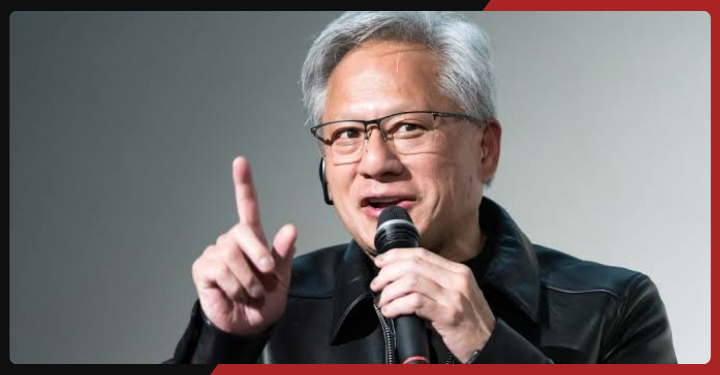

President Donald Trump and Nvidia CEO Jensen Huang appeared to find common ground on one of the technology industry’s biggest debates when they discussed artificial intelligence during a surprise live phone call.
The conversation took place during Huang’s appearance at the All-In Summit in Los Angeles. Trump called the Nvidia CEO unexpectedly, and Huang put the president on speakerphone so the audience could hear the discussion.
At the center of the conversation was a growing movement calling for caution in AI development. Some prominent technology executives and researchers believe the industry is moving too quickly and that advanced AI systems could create serious risks if companies fail to establish effective safeguards.
Trump rejected that argument. He dismissed fears about AI taking over the world and described such warnings as a hoax. He also argued that America should not allow excessive concern about AI to interfere with the industry’s growth.
Huang’s response was broadly consistent with that position. Although he has acknowledged the importance of AI safety, the Nvidia CEO has repeatedly rejected predictions that technological fears should become a reason to halt progress.
The difference between the two sides of the AI debate has become increasingly visible.
Supporters of a faster approach argue that artificial intelligence could deliver enormous economic benefits. AI systems can help automate tasks, improve scientific research, assist engineers and increase productivity across multiple industries.
Critics, meanwhile, point to cybersecurity risks, misinformation, job disruption and the possibility of increasingly autonomous systems creating unexpected consequences.
The disagreement is particularly important for Nvidia because the company supplies much of the computing hardware needed to develop advanced AI. Nvidia’s chips have become foundational infrastructure for AI laboratories, cloud companies and technology firms.
As AI systems become more capable, demand for computing power continues to grow. That has transformed Nvidia from a company once primarily associated with gaming graphics into one of the most important companies in the global technology economy.
Trump has also framed AI development as an international competition. He has repeatedly warned that the United States cannot afford to fall behind China in artificial intelligence.
From this perspective, slowing AI development could have consequences beyond Silicon Valley. It could affect economic growth, national security, military technology and America’s global influence.
Trump’s argument is that the United States should pursue innovation while taking reasonable precautions rather than imposing restrictions that could weaken its position.
Huang’s participation in the conversation gave that argument additional weight because Nvidia occupies such an important position in the AI supply chain.
The unexpected phone call also demonstrated the increasingly close relationship between technology leaders and Washington. AI companies and semiconductor manufacturers are now major participants in discussions about national policy.
The political significance of the conversation is therefore difficult to ignore. Artificial intelligence has moved from a niche technology issue to a subject that directly affects national strategy.
At the same time, the debate is far from settled. Even supporters of rapid AI development recognize that powerful systems need safeguards. The real disagreement is about how much regulation is appropriate, how quickly it should be introduced and who should be responsible for setting the rules.
The Huang-Trump conversation did not resolve those questions. Instead, it highlighted the growing divide between those who want to accelerate AI development and those who believe the industry needs to slow down.
For the audience at the All-In Summit, the moment was unexpected. For the wider technology industry, however, it reflected a much larger argument that is likely to shape AI policy for years to come.
With Nvidia positioned at the center of the AI boom and Trump emphasizing American technological leadership, their shared message was clear: concerns about AI should not become a reason to abandon the race for innovation.
