

The death sentence against Bashar al-Assad represents a historic moment for Syria, but its importance extends far beyond the former president himself. The verdict is part of a much larger struggle over how a country emerging from years of war should deal with allegations of torture, killings, repression and other serious abuses.
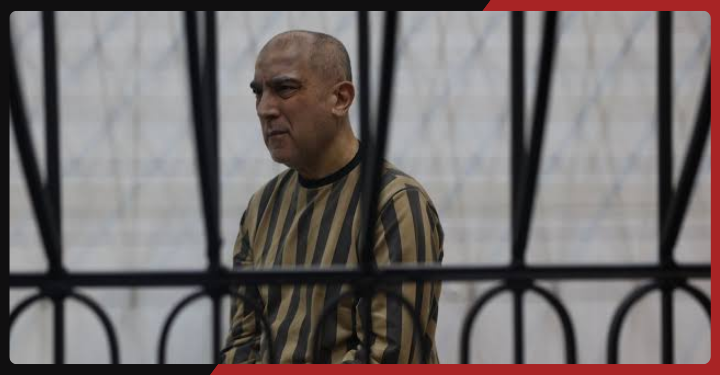
A Syrian court has sentenced Assad, his brother Maher al-Assad and their cousin Atef Najib to death. Assad and Maher were tried in absentia, while Najib was present in court.
The trial is significant because it represents a national judicial effort to address crimes associated with the former regime. Earlier this year, the Fourth Criminal Court in Damascus began proceedings against Najib, making the case the first public national trial of a prominent Assad-era official under Syria’s transitional authorities.
Najib’s position makes the case particularly important. He served as head of Political Security in Daraa during the early stages of the 2011 uprising. Daraa became a symbol of the anti-Assad movement after teenagers were detained over anti-government graffiti and reports emerged that they had been tortured.
The government’s response to demonstrations became a critical factor in the escalation of the crisis. What began as demands for reform eventually became an armed conflict that lasted for years.
During that period, accusations against the Assad government included arbitrary detention, torture, enforced disappearance, killings and attacks on civilian areas. International investigations and human rights organizations documented extensive allegations against multiple actors in the conflict.
The latest court decision therefore touches on one of the central questions facing post-war Syria: who should be held responsible?
The answer is complicated because Syria’s conflict involved numerous armed factions, foreign forces and security institutions. A credible accountability process must distinguish individual responsibility rather than simply assigning collective guilt.
This is one reason the legal structure of the trial has attracted attention. The Syrian Network for Human Rights has previously identified concerns over the legal basis of the proceedings, criminal classifications and procedural guarantees, particularly where defendants are tried in absentia.
Those concerns do not erase the significance of the proceedings. Instead, they highlight the difficulty of building a justice system while the country is still dealing with the political and social consequences of war.
For supporters, the verdict sends a powerful message that senior officials are no longer beyond the reach of Syrian courts.
For victims, the trial can provide something that has often been missing: official recognition that their experiences deserve to be heard. Families of victims from Daraa attended earlier hearings, alongside representatives of transitional justice organizations and international legal and human rights observers.
The international dimension is also important.
Bashar al-Assad fled Syria after his government collapsed and is now in Russia. His physical absence means the death sentence against him is unlikely to have an immediate practical effect unless Syrian authorities can obtain custody of him.
Nevertheless, the verdict creates a formal judicial record.
That record could matter in future legal proceedings, historical investigations and international discussions about accountability. It may also encourage other countries to pursue cases against former Syrian officials under their own laws.
The sentencing of Maher al-Assad is similarly significant because of his prominent role in the former regime’s military structure. His inclusion demonstrates that the judicial process is reaching beyond political leadership to members of the security and military hierarchy.
The case could become a model for future trials. If Syria can establish transparent procedures, protect the rights of defendants and provide meaningful participation for victims, the proceedings could help build confidence in the country’s new institutions.
If those standards are not maintained, however, the trials could face criticism as political retaliation.
That tension will remain at the heart of Syria’s transitional justice process.
The death sentence against Assad is therefore not simply the final chapter of his political career. It is also a test of the new Syria. The country must now demonstrate whether accountability can be achieved through institutions that are credible enough to survive beyond the individuals currently in power.