
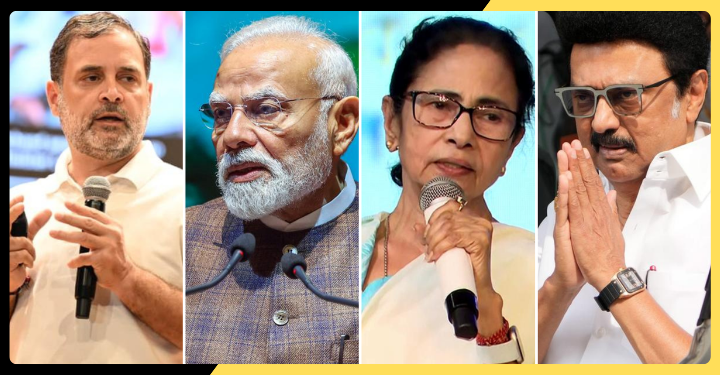

India’s 2026 Assembly election results have become a crucial reality check for both the BJP and the Congress, while simultaneously highlighting the enduring strength of regional political parties. Conducted across politically important states, the elections drew national attention because of their potential impact on future parliamentary politics.
The BJP contested the elections with a strategy built around strong leadership, welfare schemes, and development-focused governance. The party projected itself as the guarantor of political stability and economic progress, emphasizing achievements in infrastructure expansion, digital transformation, and social welfare delivery.
At the same time, the Congress attempted to reposition itself as the primary national alternative. The party focused its campaign on economic hardship, inflation, unemployment, and concerns related to social inclusion. Congress leaders also sought to strengthen local leadership structures and rebuild voter trust through grassroots outreach programs.
Regional parties, however, ensured that state-specific issues remained central to the elections. In several states, regional leaders effectively mobilized support by appealing to cultural identity, regional aspirations, and local governance concerns. Their influence once again demonstrated that India’s electoral politics cannot be understood solely through national narratives.
One of the defining aspects of the elections was the prominence of welfare politics. Competing parties announced ambitious schemes involving free electricity, financial aid, subsidized services, healthcare benefits, and educational support. Voters appeared increasingly interested in practical governance outcomes and immediate economic relief measures.
The election campaign also showcased the growing importance of digital communication in Indian politics. Parties relied heavily on social media campaigns, data-driven outreach strategies, and targeted messaging to influence voters. Online political engagement became especially significant among younger voters and urban populations.
Analysts noted that anti-incumbency remained a powerful factor in several regions. Local dissatisfaction over governance issues, corruption allegations, unemployment, and civic infrastructure influenced voter behavior in many constituencies. At the same time, incumbents with strong welfare records and effective local leadership managed to retain public support.
Women and youth emerged as influential voter groups during the elections. Political parties designed dedicated campaigns to address their concerns, including employment opportunities, education access, safety, entrepreneurship support, and direct welfare benefits. This shift reflects broader demographic changes within India’s electorate.
The results have also reignited discussions around opposition alliances at the national level. Fragmented opposition contests in some states weakened anti-BJP challenges, while coordinated alliances elsewhere proved more effective. Political observers believe these lessons will heavily influence future coalition-building efforts.
For the BJP, success in key states would reinforce its position as India’s dominant political force. Strong performances would further strengthen the party’s confidence ahead of national elections. However, setbacks in important regions could trigger internal reviews regarding candidate selection, local leadership, and state-specific strategies.
For the Congress, improved results would provide much-needed momentum and revive hopes of a broader political comeback. The party’s ability to convert public dissatisfaction into electoral gains remains a key question for the future of opposition politics in India.
Regional parties, meanwhile, are likely to emerge from the elections with renewed confidence. Their performances underline the continuing importance of state-level leadership and the resilience of India’s federal political structure.
Ultimately, the 2026 Assembly election results reflect a dynamic and evolving democracy where voters continue to balance national leadership with local expectations. The verdict has reshaped political conversations across the country and may influence India’s political direction well beyond the state level.
