
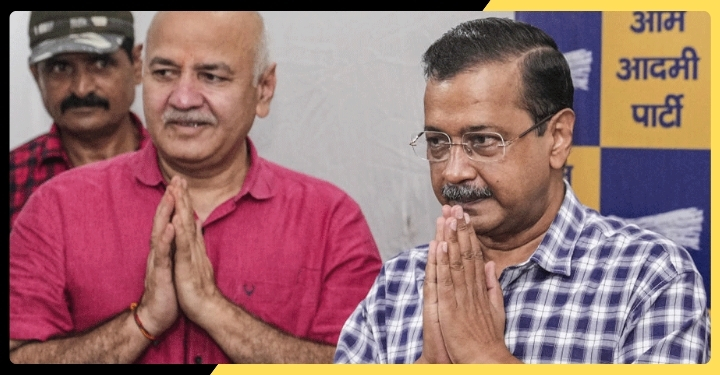

A Delhi court has cleared Chief Minister Arvind Kejriwal, former Deputy Chief Minister Manish Sisodia, and other co-accused in the high-profile excise policy case, sharply criticizing the Central Bureau of Investigation (CBI) for lapses in its probe. The ruling brings temporary closure to one of the most contentious political and legal battles in recent years.
The case centered on alleged corruption in the rollout of Delhi’s 2021–22 excise policy, which aimed to reform the city’s liquor trade by shifting to a privatized retail model. The policy was later scrapped amid allegations of procedural irregularities and undue benefits to certain private entities. The CBI alleged that bribes were paid to influence policy decisions and that key officials were complicit in a broader conspiracy.
After months of investigation and legal arguments, the court found that the evidence presented did not justify moving forward with charges. In its order, the judge stressed that the prosecution failed to establish essential elements of criminal conspiracy and corruption. The court also pointed to investigative deficiencies, including inadequate corroboration of witness testimony and gaps in financial documentation.
Significantly, the judge remarked that the investigative process must meet high standards of fairness and credibility, particularly in cases involving elected representatives. The court warned that criminal law cannot be invoked lightly and that mere suspicion, without substantive proof, cannot sustain prosecution.
The decision was met with jubilation within AAP circles. Party leaders described the ruling as a reaffirmation of their faith in the judiciary and reiterated claims that the case was politically motivated. Supporters argued that the discharge validates their stance that governance reforms were mischaracterized as criminal acts.
The CBI, while respecting the court’s authority, signaled that it may consider an appeal. Legal experts note that appellate courts can reassess the sufficiency of evidence and procedural compliance, meaning the matter could continue in higher forums.
Beyond individual relief for the accused, the ruling raises broader questions about investigative accountability. The court’s pointed observations may prompt closer scrutiny of how high-profile corruption cases are handled and the evidentiary standards applied.
Politically, the outcome could reshape narratives ahead of upcoming elections. For Kejriwal and Sisodia, the discharge removes a major legal cloud and may bolster their argument that they were unfairly targeted. For their opponents, the case may still serve as a point of political contention despite the judicial setback.
Ultimately, the court’s decision underscores a core tenet of the justice system: that charges must be backed by credible and compelling evidence. As the legal and political ramifications unfold, the excise policy case stands as a reminder of the delicate balance between accountability, due process, and democratic politics.
