

RANCHI: The Jharkhand student protest has entered a crucial phase as a major disagreement continues between the state government and job aspirants over alleged irregularities in recruitment examinations. While the government has claimed that most of the students’ demands have already been addressed, protesters insist that their key concerns remain unresolved.
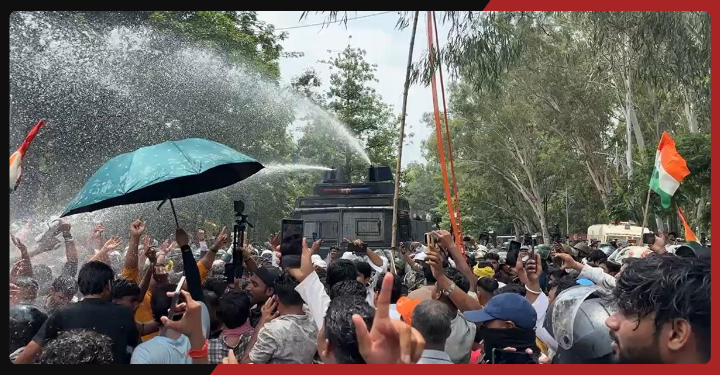
The dispute intensified on Monday when thousands of students marched towards the Jharkhand Assembly. After protesters breached barricades, police used water cannons and lathi-charge. Tear gas was also reported during the confrontation.
At the heart of the disagreement is a question of trust.
The government has reportedly said that 98% of the students’ demands have been fulfilled. The protesters have rejected that claim, arguing that the figure does not reflect the issues they consider most important. They have pointed out that only a limited number of the examinations they wanted cancelled have actually been scrapped.
Students are particularly focused on their demand for a CBI investigation into alleged irregularities in JPSC and JSSC examinations.
The demand comes amid allegations concerning recruitment processes and examination integrity. Students say that an independent investigation is necessary to establish responsibility and restore confidence among aspirants.
The controversy has affected examinations conducted by two important recruitment institutions in the state: the Jharkhand Public Service Commission and the Jharkhand Staff Selection Commission.
The JPSC conducts examinations for several important government positions, while JSSC handles recruitment for various posts under the state government. Any allegations of irregularity involving these institutions can therefore have consequences for a large number of candidates.
The student movement has grown significantly over recent weeks. Thousands of aspirants have participated in rallies and demonstrations in Ranchi. Earlier protests featured slogans demanding cancellation of disputed examinations, a CBI investigation and reforms within the recruitment commissions.
The controversy has also led to increasing political pressure on the Hemant Soren government. BJP leaders have demanded a CBI investigation and accused the government of failing to deal adequately with the allegations. BJP MPs even protested at Parliament over the issue.
The government has attempted to maintain that it is willing to listen to students. Chief Minister Hemant Soren has publicly emphasized dialogue, justice and transparency and said that the government does not want to suppress student concerns through force.
However, repeated rounds of talks have failed to resolve the central disagreement. Students continue to argue that a state-level investigation is not enough.
The latest Assembly march was therefore intended to put additional pressure on the government. Students wanted their demands to be heard directly at the seat of the state legislature.
Authorities, anticipating a large mobilisation, strengthened security around the Assembly and imposed restrictions in the surrounding area. The administration sought to prevent protesters from entering the restricted zone.
When protesters reached the barricades and attempted to move further, the situation escalated. Police used water cannons and lathi-charge, and tear gas was reported. The incident has since generated fresh debate about the handling of the agitation.
For the students, the protest is about more than a single examination. They argue that a recruitment system must offer candidates confidence that their performance will be evaluated fairly. They also want predictable examination schedules and accountability when irregularities are alleged.
The government faces a difficult challenge. Accepting every demand could have administrative and legal consequences, while rejecting the protesters’ core demand could prolong the movement.
The longer the deadlock continues, the greater the pressure on both sides. Students have already demonstrated their willingness to remain on the streets, while the administration has shown that it is prepared to deploy significant security around sensitive government locations.
A possible way forward could involve a transparent process in which the allegations are independently examined and the findings are made public. Clear timelines for investigations and examinations could also help reduce uncertainty among aspirants.
For now, however, the positions remain far apart. The students say their principal demand has not been accepted, while the government maintains that significant progress has already been made.
Monday’s confrontation has therefore become a defining moment in the Jharkhand recruitment controversy. Whether it becomes the beginning of another round of confrontation or creates an opportunity for fresh negotiations will depend largely on how both sides respond in the coming days.
