
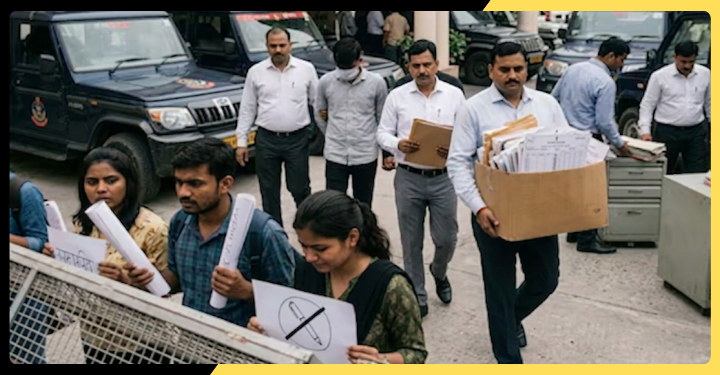

The controversy surrounding the alleged NEET UG 2026 paper leak has taken a dramatic turn after investigators revealed that one accused allegedly bought the examination paper for his son. The student, according to officials, had barely managed to clear Class 12 with grace marks, raising fresh concerns over desperation and corruption in India’s competitive exam system.
Police officials investigating the matter stated that the accused father reportedly paid a hefty amount to intermediaries claiming access to the NEET question paper before the exam. Authorities suspect the operation was carefully coordinated using digital communication platforms and cash transactions designed to avoid detection.
The National Eligibility cum Entrance Test (NEET) remains one of India’s toughest entrance examinations, with lakhs of students competing every year for limited medical seats. The intense competition has often created immense psychological pressure on students and parents alike. However, investigators say this pressure cannot justify criminal activity.
According to sources, the student linked to the case had a poor academic track record and reportedly passed the Class 12 board examinations only after receiving grace marks. Investigators believe the family feared the student would fail to secure admission through merit, leading them to seek unlawful alternatives.
The investigation has uncovered possible links between coaching operators, brokers, and technology experts allegedly involved in circulating leaked exam material. Authorities are examining digital evidence, including mobile phones, laptops, and financial records seized during raids.
The revelations have angered students who prepared honestly for the examination. Many aspirants expressed frustration on social media, saying years of hard work become meaningless when paper leaks compromise fairness. Parents’ associations have also demanded accountability from examination authorities.
Education analysts say repeated exam leak controversies expose major weaknesses in the country’s testing infrastructure. They argue that criminal networks are exploiting gaps in paper transportation, digital security, and local administration systems.
Meanwhile, officials are considering whether affected examination centers require additional scrutiny. Some experts have called for re-examinations if investigators confirm widespread compromise of question papers. However, such a decision could impact lakhs of students and create nationwide uncertainty.
Political parties have also entered the debate, accusing each other of negligence and administrative failure. Opposition leaders demanded a judicial inquiry, while government representatives promised strict punishment for every individual involved in the alleged scam.
The case has revived discussions around the commercialization of education and rising societal pressure to enter professional courses like medicine. Experts warn that parents pushing students toward unrealistic expectations can sometimes fuel unethical decisions.
Cybercrime specialists assisting the investigation are now tracing communication channels used to distribute the alleged paper leak. Investigators suspect encrypted messaging apps and disposable phone numbers may have been used to avoid surveillance.
Legal experts note that individuals found guilty could face severe punishment under examination malpractice laws and criminal conspiracy provisions. Students benefiting from leaked papers may also face cancellation of results and future disqualification from competitive exams.
As the investigation continues, students across India await clarity on whether the integrity of NEET UG 2026 can still be trusted. The scandal has once again highlighted the urgent need for reforms aimed at protecting the credibility of national-level examinations.
