
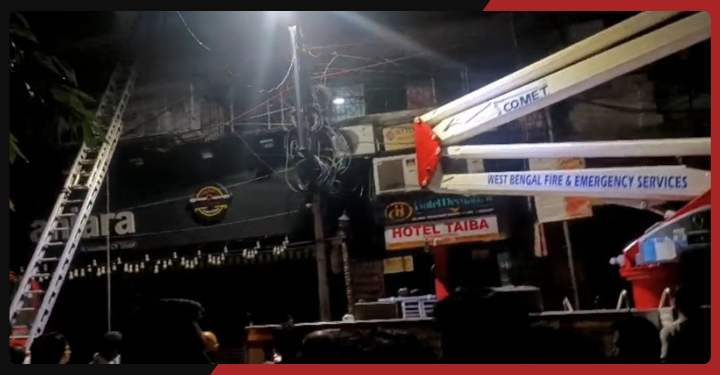

Investigators are examining a possible air-conditioner-related cause after a devastating fire at a hotel in central Kolkata killed at least nine people, including a child, in the early hours of Wednesday.
The blaze broke out around 2 a.m. at a building on Mirza Ghalib Street. Fire officials and emergency responders rushed to the location after receiving information about the fire. The situation quickly became critical as smoke spread through the building and occupants struggled to escape.
Initial reports suggested that an air-conditioner may have exploded and triggered the blaze. However, authorities have not confirmed this as the final cause. The investigation will need to establish whether the equipment malfunctioned, whether electrical wiring was involved or whether another source caused the fire.
At least nine people were killed. One of the victims was a child. Several other people were rescued and taken to hospital after suffering injuries. Reports have also identified the victims as Bangladeshi nationals who had reportedly travelled to Kolkata for medical treatment.
The circumstances have raised questions about electrical and equipment safety inside hotels. Air-conditioning units are commonly used in hotels and guest houses, particularly during Kolkata’s hot and humid weather. Faulty wiring, overloaded electrical circuits, poor maintenance or malfunctioning equipment can potentially create serious risks.
However, investigators will need to rely on forensic examination rather than preliminary assumptions. Determining the cause of a fire requires examination of electrical systems, appliances, wiring, burn patterns and other evidence at the scene.
The response to the incident also highlighted the difficulties faced by emergency personnel when fires occur in densely populated areas. Mirza Ghalib Street is situated in a busy central part of Kolkata, where buildings and commercial establishments are closely packed. Firefighters must often work within limited space while attempting to reach upper floors and rescue trapped occupants.
The presence of thick smoke reportedly made the operation more difficult. Smoke can spread rapidly through enclosed areas, reducing visibility and making it difficult for people to locate exits. For people asleep at the time, the danger can increase significantly because they may not immediately notice the fire.
The tragedy has renewed discussion about the importance of hotel fire-safety systems. Regular electrical inspections, proper maintenance of air-conditioning equipment, functioning smoke alarms and accessible evacuation routes are essential in buildings where people stay overnight.
Kolkata has previously experienced deadly hotel fires that exposed shortcomings in fire protection. The 2025 Hotel Rituraj tragedy, which killed 14 people, led to concerns about emergency exits, firefighting equipment and combustible materials inside the building.
The latest incident could therefore prompt authorities to review existing safety arrangements at hotels and guest houses, especially in older and congested parts of the city.
The investigation may also determine whether the building had all necessary approvals and whether safety equipment was available and operational.
For now, officials have focused on rescue, treatment of the injured and identification of those who died. Families are awaiting further information as authorities continue their investigation.
The possible involvement of an air-conditioning unit is an important line of inquiry, but it should not be treated as a confirmed explanation until investigators complete their examination.
Ultimately, the tragedy raises a broader issue: preventing fires requires more than responding after flames appear. Regular maintenance, inspections and enforcement must happen before an emergency occurs.
The Kolkata hotel fire has therefore become both a rescue tragedy and a warning. The final findings could determine whether the incident was an unavoidable accident or whether failures in maintenance, safety compliance or emergency preparedness contributed to the scale of the loss.
