
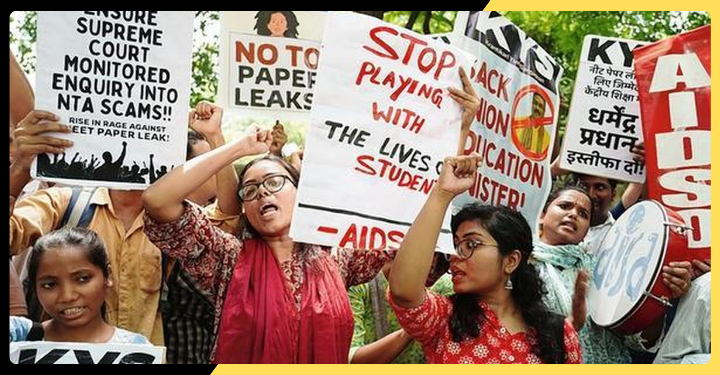

The National Testing Agency (NTA) has presented a comprehensive corrective framework before the Supreme Court following allegations of a paper leak in the NEET-UG 2024 examination. In its affidavit to the apex court, the agency detailed a wide range of reforms and security measures aimed at strengthening the examination system and preventing future irregularities.
The controversy surrounding the NEET-UG examination emerged after reports claimed that question papers had been leaked before the test was conducted. The allegations led to widespread protests by students and parents, raising serious concerns over the fairness and credibility of the examination process. Several petitions were subsequently filed before the Supreme Court seeking cancellation of the examination and a fresh test.
The NEET-UG examination is considered one of the most competitive entrance tests in India, serving as the gateway to undergraduate medical admissions in government and private institutions. With millions of students appearing for the exam each year, any compromise in the system has significant implications for academic fairness and student careers.
In its affidavit, the NTA stated that preserving the sanctity of the examination process remains its top priority. The agency informed the court that it has begun implementing a comprehensive framework focused on digital security, operational transparency, technological upgrades, and stricter administrative monitoring.
One of the key reforms highlighted in the affidavit is the introduction of advanced encryption technology for handling confidential examination materials. According to the agency, question papers will be protected through secure digital systems with limited access authorization and multi-factor authentication. Officials believe this will minimize the possibility of unauthorized leaks before the examination.
The NTA also announced changes in the transportation and storage of examination papers. GPS-enabled monitoring systems are expected to track vehicles carrying confidential material in real time. The agency said this would improve accountability and allow authorities to respond immediately to suspicious activities during transit.
Biometric verification systems are also likely to become mandatory at examination centers. The NTA plans to use fingerprint scanning, facial recognition technology, and live digital attendance mechanisms to prevent impersonation and fraudulent practices. Such systems are expected to improve candidate verification and maintain transparency during examinations.
The affidavit further revealed that stricter criteria would be applied while selecting examination centers. Institutions lacking adequate security infrastructure or those previously linked to irregularities may be removed from the approved list. CCTV surveillance, secure storage facilities, and proper invigilation systems are expected to become compulsory requirements for all centers.
The NTA also informed the court that artificial intelligence-based surveillance systems may be deployed in future examinations. AI-driven analytics could help detect suspicious behavior, abnormal score patterns, and coordinated malpractice attempts in real time. Education experts believe such technology can significantly strengthen the monitoring process.
Coordination with state governments and law enforcement agencies is another major component of the proposed framework. The agency said that district administrations, police departments, and cybercrime units would work together during examination periods to ensure strict vigilance and rapid response to any complaints.
The Supreme Court, during earlier hearings, observed that even isolated incidents of malpractice could undermine the trust of students and parents in the examination system. The court stressed the need for accountability and directed authorities to ensure that corrective measures are implemented effectively.
The paper leak controversy has intensified discussions about broader examination reforms in India. Experts argue that the increasing scale of competitive examinations requires stronger digital safeguards, independent oversight mechanisms, and severe penalties for those involved in organized cheating networks.
Meanwhile, investigative agencies continue to probe the alleged leak. Several arrests have reportedly been made across different states in connection with the case. Authorities are examining whether organized criminal networks were involved in illegally obtaining and distributing examination papers.
The NTA concluded its affidavit by assuring the Supreme Court that it remains committed to conducting examinations in a transparent, secure, and merit-based manner. The agency expressed confidence that the newly introduced corrective framework would strengthen public trust and ensure fair opportunities for all candidates in future NEET examinations.
