
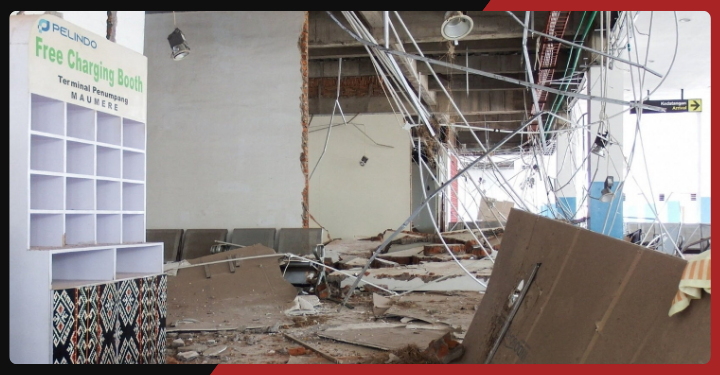

Indonesia’s Flores Island is facing a major rescue and relief challenge after a powerful 7.7-magnitude earthquake caused widespread structural damage, landslides and casualties. At least 38 people were reported dead after the initial toll of 20 increased as rescuers reached more affected locations.
The earthquake struck early Saturday off the northern coast of Flores. The shallow quake produced powerful shaking that damaged buildings across parts of East Nusa Tenggara.
Visuals from affected areas showed collapsed structures and debris scattered across streets. Emergency workers were seen searching through rubble for people who might still be trapped.
One of the biggest obstacles facing rescuers is the island’s terrain. Landslides have blocked roads and isolated communities. The Trans-Flores highway was also disrupted, making transportation more difficult.
The damage means that emergency teams cannot simply drive into every affected community. In some places, rescuers have to wait for roads to be cleared or use alternative transportation.
Communications have also been affected. Power outages and damaged communication networks have made it difficult for residents to contact relatives and for authorities to gather accurate information.
The challenges are especially serious because the death toll may continue to change. After major earthquakes, initial casualty figures often reflect only the locations that emergency teams can reach immediately. More victims may be discovered as rescue teams enter isolated or heavily damaged areas.
Authorities reported that around 2,000 people had evacuated. Some residents moved to safer areas because their homes were damaged, while others left because of concerns about aftershocks.
A tsunami warning added another complication. Because the earthquake occurred offshore, coastal residents were warned about potential tsunami waves. The warning was eventually lifted after the immediate threat passed.
Despite the lifting of the warning, emergency officials remain cautious. Damaged buildings can collapse during aftershocks, and unstable slopes can produce additional landslides.
The disaster has prompted authorities to mobilise additional rescue resources. Helicopters and other aircraft were being prepared to help reach areas where ground access was difficult.
The earthquake has also highlighted the vulnerability of communities in Indonesia’s eastern islands. While Indonesia has extensive experience responding to earthquakes, remote geography can create serious logistical difficulties.
Flores is located in one of the world’s most earthquake-prone regions. Its location near major tectonic boundaries means residents regularly experience seismic activity. But earthquakes of this magnitude can still overwhelm local emergency systems.
For now, the priority remains finding survivors. Rescue workers are searching collapsed buildings, checking damaged roads and coordinating medical assistance.
Families are also waiting for information about missing relatives. With communication networks disrupted in some areas, authorities face the difficult task of confirming casualties and identifying victims.
The coming hours will be critical as rescue teams gain access to more communities. The full scale of the disaster may only become clear after emergency crews complete their initial assessment.
